
Document Translation Requirements in Spain
Official bodies in Spain generally require a sworn translation of foreign-language documents, and many documents also need an apostille or legalization before they are translated. Below: who can translate, when an apostille is needed, and where the official rules are published.
Spain recognizes a traducción jurada — a sworn translation by a traductor-intérprete jurado appointed by Spain's Ministry of Foreign Affairs (MAEC), who stamps and signs it. For a Spanish document used in the United States you instead need a certified English translation with a signed Certificate of Accuracy, which USCIS and universities accept. Spain has been in the Hague Apostille Convention since 1978, so a Spanish certificado is apostilled by the competent Spanish authority — not legalized at a consulate.
Spain requirements at a glance
| Translation standard | Sworn translation · traducción jurada |
|---|---|
| Who can translate | Sworn translator appointed by the Ministry of Foreign Affairs |
| Apostille | Often required for foreign documents, depending on country of origin |
| Apostille authority | Depends on the document: notarial and judicial documents are apostilled by the College of Notaries (Colegio Notarial) or the regional High Court of Justice (Tribunal Superior de Justicia); central-government and education documents by the Ministry of Justice. |
| Accepted languages | Spanish |
| Responsible authority | Spanish Ministry of Foreign Affairs, European Union and Cooperation |
Who can translate documents for use in Spain?
What makes a translation official in Spain?
How does Spain treat documents from abroad?
Legal basis
Apostille & legalization for Spain
Spain is part of the Hague Apostille Convention (since 1978), so public documents are authenticated with a single apostille — no consular legalization.
Documents from Spain
Depends on the document: notarial and judicial documents are apostilled by the College of Notaries (Colegio Notarial) or the regional High Court of Justice (Tribunal Superior de Justicia); central-government and education documents by the Ministry of Justice.Spain has been a party to the Convention since 1978.
U.S. documents going to Spain
A U.S. document going to Spain is apostilled in the United States — the state Secretary of State, or the U.S. Department of State for federal documents — and then translated into Spanish by a traductor jurado.
The apostille should be obtained before the translation, so the apostille certificate is translated too. See how apostilles work, or order a translation with e-apostille.
How to get a Spain document translation accepted
- 1
Apostille the Spanish original (if the receiving office requires it)
A Spanish public document is apostilled by the competent Spanish authority before translation, so the apostille is covered too.
- 2
Order a certified English translation of the full document
Include the registro civil data, the CSV electronic-verification code on digital certificates, and any seals, with a signed Certificate of Accuracy.
- 3
Submit the original plus the certified translation
File the apostilled original or certified copy with the certified translation to USCIS, the university, or the credential evaluator.
Ready to translate your Spanish documents?
Certified for USCIS, universities, and credential evaluators — from $24.95/page.
Which direction are your documents going?
Translating Spanish documents for the U.S.?
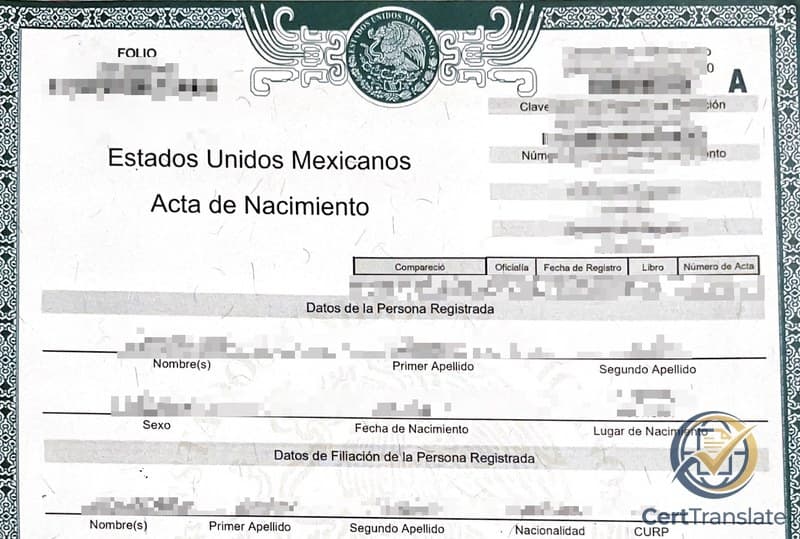
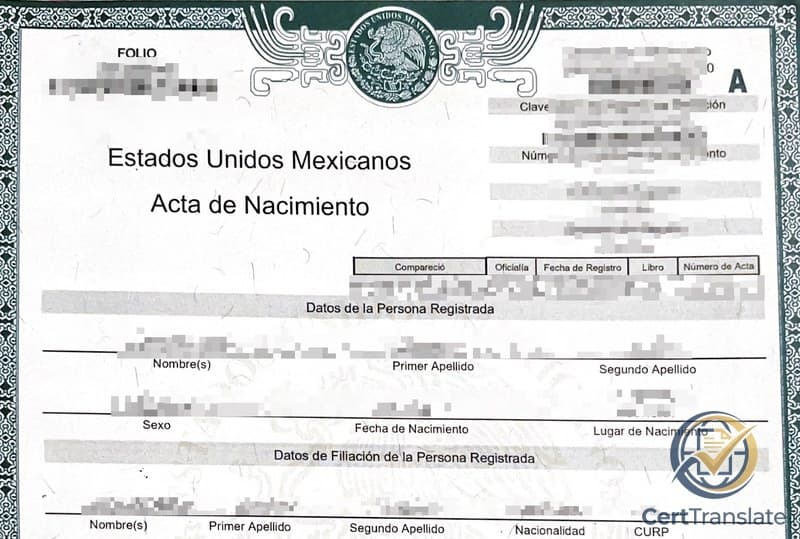
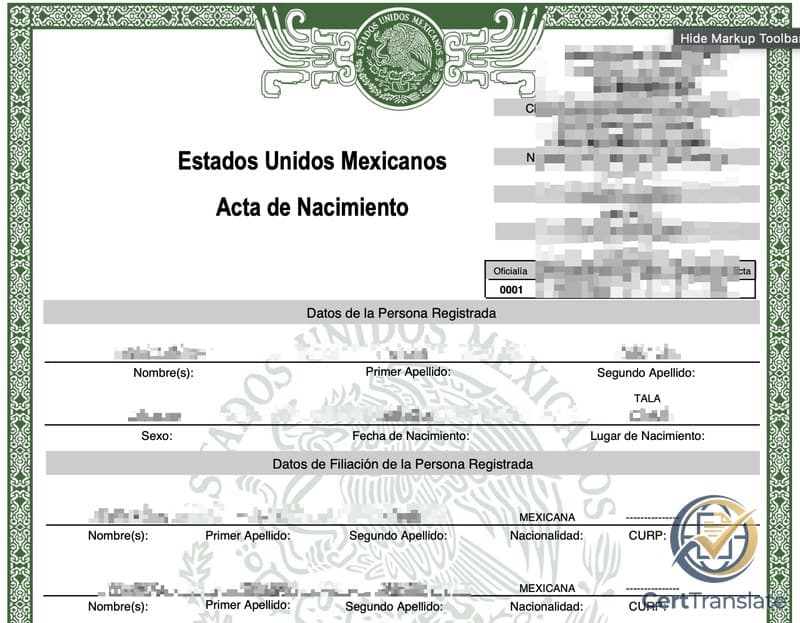
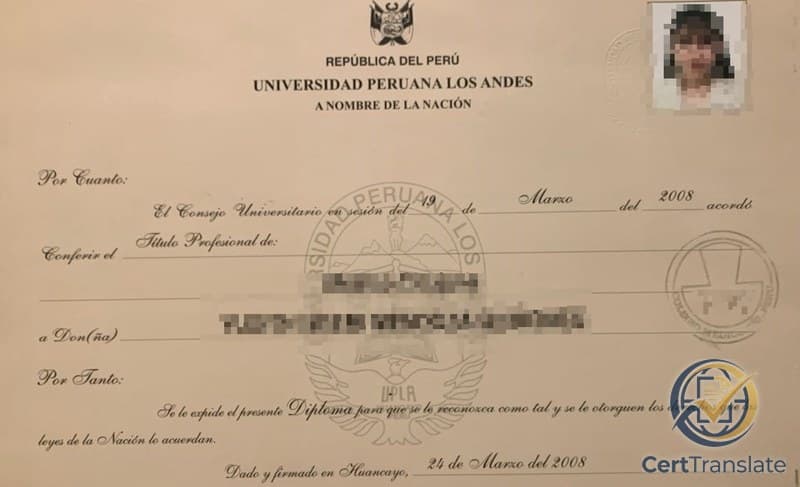
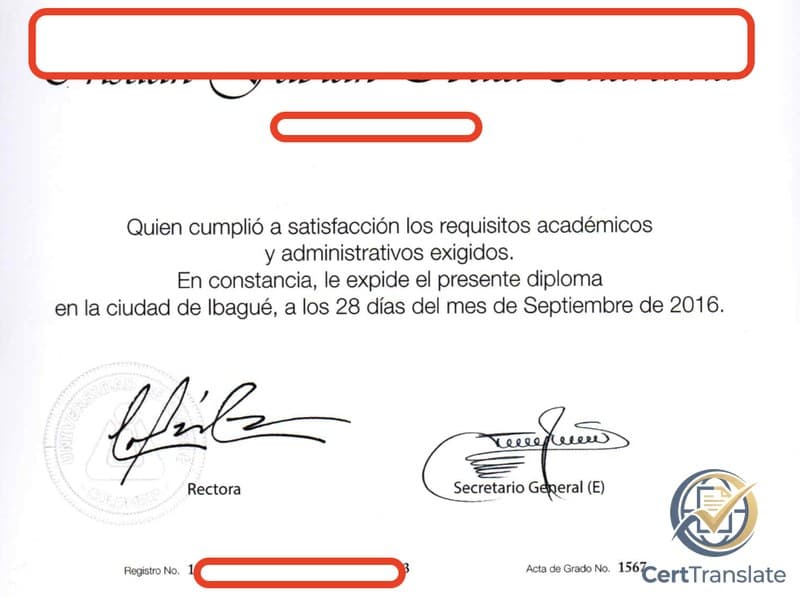
Spanish birth certificates, diplomas, and transcripts submitted to USCIS, universities, or credential evaluators need a certified English translation — that is exactly what we do — backed by our revise-free-or-refund acceptance guarantee.
Sending U.S. documents to Spain?
U.S.-issued documents usually need an apostille before they can be used in Spain — and the apostille should be obtained before the translation, so the certificate itself gets translated too. We offer e-apostille processing as an add-on to any order.
Popular certified translations
The Spanish documents we translate most often — each with its own pricing and requirements page.
Why Spain document translations get rejected
The mistakes we see most often on Spanish documents — and what a correct certified translation does instead.
Electronic certificate with a CSV code but no wet seal
Spanish civil-registry certificates are increasingly electronic, authenticated by a CSV (Código Seguro de Verificación) rather than a stamp; the CSV must be reproduced or the document reads as uncertified.
Read the caseLiteral certificate field codes flattened
A certificación literal repeats the registry's inline field codes; collapsing them loses data USCIS expects to see line-for-line.
Read the caseApostille translated without the underlying document
An apostille authenticates a specific document; translating the apostille alone, detached from the certificate it certifies, leaves an incomplete submission.
Read the caseReal Spanish translation cases we've handled
Anonymized Spanish-to-English orders. Each case shows the exact translation problem and how we solved it for the receiving authority.
Cost & turnaround
A one-page certificado is priced as a single page; multi-page literal certificates and court rulings are priced by their page count. Standard delivery is 24–48 hours, with notarization and e-apostille available as add-ons. See full pricing.
Spain translation requirements — FAQ
What translation does Spain require for foreign documents?
Spain requires a traducción jurada by a traductor-intérprete jurado appointed by the Ministry of Foreign Affairs (MAEC). The foreign document is apostilled first, then translated by the sworn translator.
how apostilles workDo I need a sworn translator for a Spanish document used in the U.S.?
No. U.S. authorities do not use Spain's traductor jurado system. A Spanish certificado or título needs a certified English translation with a signed Certificate of Accuracy, which USCIS, WES, and ECE accept.
certified Spanish translationIs Spain in the Hague Apostille Convention?
Yes, since 1978. A Spanish public document used abroad is apostilled by the competent Spanish authority, not legalized at a consulate.
requirements for other countriesShould I order the literal or the extracto birth certificate?
For a U.S. submission, request the certificación literal — the full transcription. It carries every registry annotation; the extracto is a summary and can omit details USCIS or a university needs.
Spanish birth certificate translationHow are Spanish grades translated for WES?
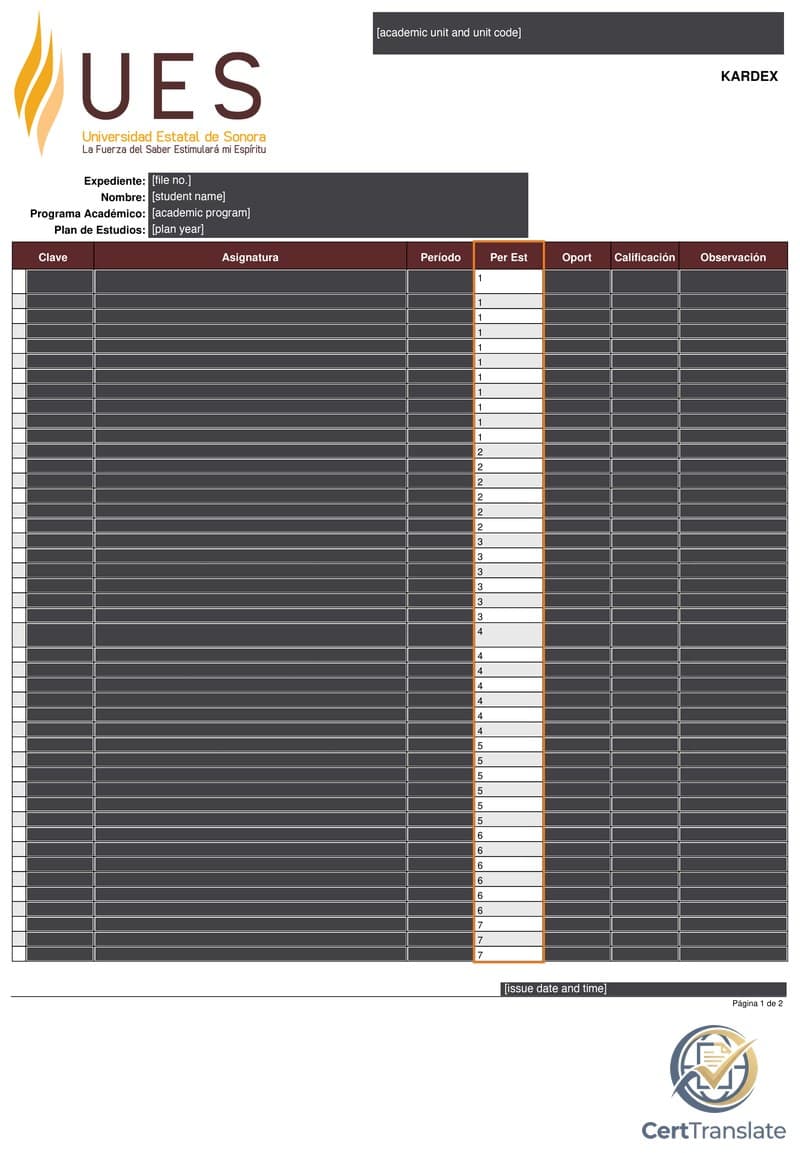
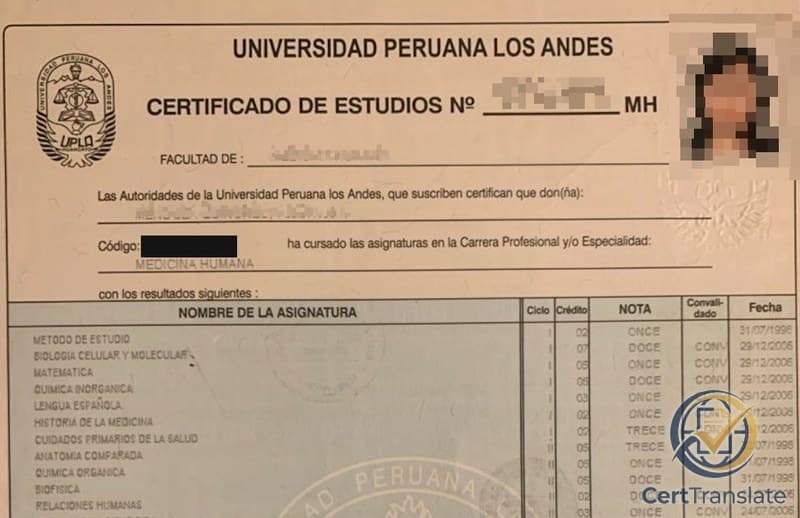
Spanish grades run 0–10, with Matrícula de Honor as the top distinction. A certified transcript translation preserves the scale and the distinction so WES or ECE can map them, rather than converting to a U.S. GPA.
WES translationDoes a digital Spanish certificate with a CSV code need translation?
Yes. The CSV (Código Seguro de Verificación) replaces the wet seal on electronic certificates; the certified translation reproduces the CSV and the registry data so the document stays verifiable.
birth certificate translationHow much does a Spanish document translation cost?
Pricing is per page. A one-page certificado is a single page; multi-page literal certificates and court rulings are priced by page count. Notarization and e-apostille are optional add-ons.
see live pricingCan I translate my own Spanish documents?
No. USCIS and universities reject self-translation. An independent qualified translator must complete and certify the translation with a statement of accuracy.
what a certified translation isRequirements in related countries
Neighbors and countries with a similar translation standard.
Sources
- Sworn translators and interpreters (Traductores-Intérpretes Jurados)Ministerio de Asuntos Exteriores, Unión Europea y Cooperación (MAEC)
- Apostille Convention — specialised sectionHague Conference on Private International Law (HCCH)
Information verified against official sources. Last verified June 2026.
Need a certified Spanish translation?
Signed Certificate of Accuracy with every order, a revise-free-or-refund acceptance guarantee, optional notarization and e-apostille — delivered in 24–48 hours.