
Citizenship Translation Requirements and Document Checklist
Form N-400 Records Translated in 24 Hours · Birth, Name-Change, and Court Documents Covered

Reviewed by Reviewed by Natalia Vega, Senior USCIS Translation Reviewer
11 years in certified translation · ATA member since 2017 · High-volume N-400 support-document reviewer
“The naturalization delay I see most often is an applicant who brings the current passport and green card, but not the older foreign-language name-change, marriage, or court record USCIS wants translated for the interview.”
Your instant price
Citizenship / NaturalizationReview before payment · acceptance guarantee




What Documents Need Translation for Naturalization?
Form N-400 is the application used for naturalization. As of February 27, 2026, the USCIS Form N-400 page says many applicants may file up to 90 calendar days before completing the 5-year continuous residence requirement, or 3 years for certain applicants married to U.S. citizens.
When a naturalization packet includes foreign-language records, translation for naturalization should be completed before filing or before interview preparation begins. USCIS also notes that if you submit documents in a foreign language, you must include a full English translation with the translator certification statement.
The checklist below covers the documents most likely to trigger translation work in N-400 cases. Your exact document set depends on your filing basis, history, and what USCIS requests, but any non-English record in the packet should be translated in full.
Permanent Resident Card (Green Card)
N-400
USCIS asks for a copy of both sides, but the card itself is already in English and usually does not need translation.
Birth certificate
N-400, interview support
Birth certificate translation for citizenship cases is most often needed when identity history or interview evidence requires the original civil record.
Marriage certificate
N-400, 3-year rule
Marriage certificate translation for N-400 is commonly needed when the filing is based on marriage to a U.S. citizen or the record explains a name change.
Divorce decree or annulment record
N-400, interview support
Divorce document translation for citizenship cases may be needed when prior marriages affect identity history or interview review.
Passport pages and travel evidence
N-400, travel history support
Foreign-language passport pages, travel stamps, or related identity evidence may need translation when they support travel or identity history.
Foreign tax returns or financial support evidence
N-400, 3-year rule, RFE support
Tax materials or related financial evidence can become relevant when USCIS requests proof tied to the naturalization filing basis.
Name change records or foreign court orders
N-400, interview support
Any foreign-language record explaining a prior legal name change should be translated before the interview.
Arrest records, court dispositions, or probation documents
N-400, good moral character support
Court-certified arrest reports, dispositions, fines, probation, or parole records may need complete translation if USCIS reviews good moral character evidence.
Selective Service or foreign military/service records
N-400, interview support
Foreign-language service records may need translation if USCIS asks about Selective Service compliance or military history.
The most common cross-cluster request on this page is birth certificate translation for citizenship filings. Applicants often do not need it for every case, but when USCIS wants the original civil record at interview, the English translation should already be ready and certified.
Marriage certificate translation for N-400 becomes especially important when the case uses the 3-year rule based on marriage to a U.S. citizen or when the record explains a legal name change that appears across other documents.
Divorce document translation for citizenship filings is another frequent gap. Applicants may focus on current eligibility and forget that an older prior-marriage record, court order, or name-change document still needs English translation before the interview.
Check What Documents You Need Translated — Free, 2 Minutes →
Common Languages for Citizenship Document Translation
Spanish, Chinese, Arabic, Korean, Vietnamese, Tagalog, and Hindi are common source languages in naturalization work because many N-400 packets include older civil records from the same countries involved in the original green card process.
If your records are in Spanish, our certified Spanish translation services handle naturalization support documents daily, including birth certificates, marriage records, divorce decrees, passports, court papers, and older tax or identity evidence tied to the interview.
For Chinese and Arabic records, our certified Chinese translation services and certified Arabic translation services are structured for packet-level consistency. That matters when one N-400 case includes a passport, a name-change order, a court record, and civil documents that all need names and dates aligned before USCIS review.
How to Get Your Citizenship Documents Translated — Step by Step
Review your N-400 filing basis and interview evidence
Start with Form N-400 and identify whether the case is based on the 5-year rule, the 3-year rule through marriage, or another naturalization path that changes the supporting evidence list.
Gather every non-English civil, name-change, tax, court, or service record that may be filed with the application or taken to the naturalization interview.
Upload scans, photos, or PDFs in any format
Clear phone photos are acceptable as long as the entire page is visible, including margins, seals, attachments, and reverse sides.
If a court or service record includes several pages, upload the full set so the translation packet remains complete.
We assign native speakers with naturalization-packet experience
Your files go to translators who regularly handle N-400 support documents instead of generic commercial text.
That matters because naturalization packets often mix civil records, older legal history, and interview-support documents that must stay consistent across names, dates, and case references.
Translation and certification are prepared together
Every visible source-language element is translated, including stamps, seals, structured fields, and handwritten notes.
The final packet includes the English translation and the signed Certificate of Accuracy USCIS expects with foreign-language evidence.
Review and delivery before filing or interview
Before delivery, we check names, prior marriages, court references, and date formats across the packet.
Most short civil records are delivered within 24 hours as PDF files, with optional hard-copy mailing for attorney prep or interview folders.
Naturalization applicants often realize they need translation only when preparing for the interview. Starting earlier is usually better, because USCIS may ask for original documents such as birth, marriage, divorce, court, or name-change records depending on the case scenario.
Files are handled through encrypted upload channels, access is limited to production staff, and deletion policies are available for sensitive immigration records.
Translation Cost for Naturalization
Flat per-page rate — no surprises, no hidden fees.
Certified Translation
Starting Rate
Standard Turnaround
1-2 Days
(Typically 24h)
Pay only after you review the quote
Cost by Document
Always Included — No Extra Cost
Naturalization translation is priced by page, not by the N-400 form itself. Our $24.95 base rate includes human translation, the signed certification statement, and revision support if USCIS or an attorney flags a translation-format issue. Many immigration translation providers charge $30-$60 per page for similar work. Exact pricing is confirmed after document review and before payment, and our full translation pricing is available on the pricing page.
View full pricing detailsMistakes That Delay Naturalization Applications
1Submitting an incomplete naturalization packet
Consequence
Applicants often translate only the document they expect USCIS to ask about first and overlook a supporting page, attachment, or second civil record tied to the same history.
Our Solution
Use the checklist above and upload every non-English record that may be filed with Form N-400 or brought to the interview.
2Using machine translation or self-translation
Consequence
Machine output and self-prepared translations often fail on certification language, completeness, or the treatment of stamps and handwritten notes.
Our Solution
Use a third-party translator who provides the full English translation and a signed Certificate of Accuracy for USCIS review.
3Leaving out the certification statement
Consequence
A translated page without certification is incomplete because USCIS still needs the translator to attest that the English version is complete and accurate.
Our Solution
Confirm that every delivered translation includes the signed certification statement and company identification.
4Letting names drift across older records
Consequence
Naturalization cases often involve older records from different life stages. One mismatch between a passport, birth record, marriage certificate, and N-400 answer can create unnecessary interview questions.
Our Solution
Provide the exact passport spelling and any prior USCIS spellings at intake so names and dates can be aligned across the full packet.
5Not translating foreign name-change or court documents
Consequence
This is one of the most common naturalization-specific problems. Applicants focus on the current N-400 answers and forget that the document proving a prior name change, arrest disposition, or divorce history still needs English translation.
Our Solution
If a name change, court record, or prior marriage appears anywhere in your history, upload the full supporting record before the interview stage.
Citizenship Translation Requirements in Real Naturalization Packets
Naturalization packets are a core share of our USCIS translation workload, especially for applicants reusing older civil and legal records from their permanent residence history.
Experience
Every N-400 translation order is reviewed for court references, name-change history, certification completeness, and visible-page coverage before delivery.
Quality Assurance
We support mixed-language naturalization packets across 100+ source languages, from one-page birth records to multi-document interview folders that include court, tax, and service evidence.
Coverage
The strongest naturalization translation work is not just accurate sentence by sentence. It is interview-ready, packet-aware, and checked for the older identity and legal history records that applicants are most likely to overlook.
Real translation cases for Citizenship / Naturalization filings
Anonymized translations we've delivered for Citizenship / Naturalization packages. Each case names the source-document quirk and the translation decision that kept the packet clean.
 RecentJul 2026multilingual-documentNetherlands
When a Foreign Document Is Already Partly in English
A Dutch Certificate of Conduct (Verklaring Omtrent het Gedrag) from the Netherlands arrived for a USCIS filing already partly in English. Its field labels, screening profile, and closing paragraph were printed in both Dutch and English. USCIS still requires a complete certified translation. We translated the Dutch-only portions, reproduced the English exactly as printed, and added a Translator's Note explaining the bilingual layout. The full document was certified and delivered.
Handled by Klaus Weber, European Medical & Scientific TranslatorUSCISRead case → RecentJul 2026transliterationUkraine
When a Ukrainian Marriage Certificate Evidences an N-400 Name Change
A Ukrainian marriage certificate from Odesa was translated in 2026 to evidence a wife's surname change on her N-400 filing. Both spouses had taken the husband's surname, and the wife had been using it on her US documents for years. The translator deferred to the bearers' Ukrainian passport spellings for every Latin-script name, rendered patronymics under BGN/PCGN Ukrainian, and documented the convention in a Translator's Notes block. The translation was delivered without an RFE on the name change.
Handled by Elena Sokolova, Certified Legal & Official Documents TranslatorUSCIS N-400 naturalization filingRead case →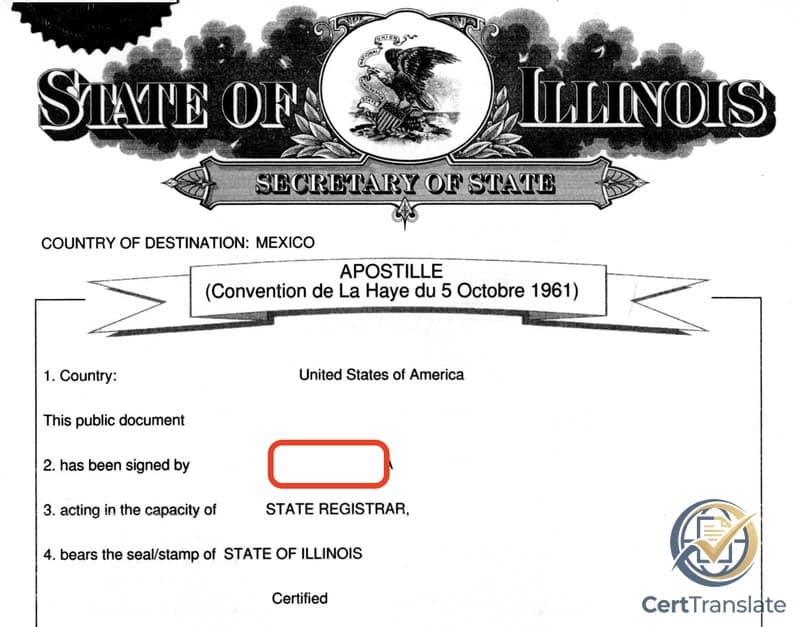 Jun 2026Source field accepts age OR date of birth and the registrar entered age only; client supplied missing data separatelyUnited States
When a US Birth Certificate Lists Parents' Age, Not Date of Birth
An Illinois short-form [birth certificate translation](/documents/birth-certificate) was needed in Spanish for a Mexican consulate dual-citizenship filing. The parents' rows carried integer ages (20, 23) in a 'Date of Birth or Age at Time of Birth' field — no dates. The client asked us to add DOBs and full Mexican-convention surnames they had verified separately. We translated strictly what was on the source, documented the field structure in a Translator's Note, and advised on documents the consulate accepts for missing fields.
Handled by Mateo García, Senior Immigration Translation SpecialistMexican consulate (registro de doble nacionalidad / dual citizenship)Read case →
Other Immigration Translation Guides
Green card translation
Naturalization applicants usually completed the green card process first, and many of the same civil records carry forward into the N-400 stage.
Family petition translation
Marriage, parent, and sibling petitions often create the relationship history documents that later resurface in naturalization packets.
Credential evaluation translation
Some applicants need academic translation support in parallel for employment, licensing, or status-history documentation even while pursuing naturalization.
USCIS translation guide
Use the broader USCIS guide if you want the general translation rules first before focusing on Form N-400 and interview documents.
Need documents for multiple filings? Upload everything in one order at the same $24.95/page rate so names, dates, and supporting evidence can be checked together.
Frequently Asked Questions About Citizenship Translation
How much does translation cost for naturalization?
Translation for naturalization starts at $24.95 per page. Many N-400 packets fall between $74.85 and $249.50 depending on how many civil, court, tax, and support records need certified translation.
What documents need translation for naturalization?
Any non-English document you submit with Form N-400 or bring as supporting evidence should be translated in full. Common examples include birth certificates, marriage and divorce records, name-change documents, tax materials, court dispositions, and service records.
How long does translation take for naturalization filings?
Most short civil records for naturalization are delivered within 24 hours. Larger court files, handwriting-heavy records, or multi-document interview folders may take longer, but timing is confirmed before payment.
Will my translations be accepted by USCIS for Form N-400?
USCIS generally accepts complete certified translations that include the English rendering and a signed certification statement from a competent translator. Our citizenship translation requirements workflow is built around that standard, but USCIS always makes the final decision on a filing.
Can I translate my own documents for naturalization?
Self-translation is a common risk in naturalization cases. USCIS expects foreign-language evidence to come with complete English translation and third-party certification, and self-prepared versions often create questions about completeness, neutrality, or omitted page elements.
What is the difference between certified and notarized translation for naturalization?
Certified translation and notarized translation are different services. USCIS usually focuses on the certification statement, while notarization is only added if another receiving authority or attorney wants that extra step.
Do I need an apostille for naturalization?
Usually no. Naturalization filings generally focus on complete English translation and certification rather than apostille, although another authority outside USCIS may separately ask for apostille on the same original record.
Do I need to translate my green card for N-400?
Usually no. The USCIS-issued Permanent Resident Card is already in English, so it usually does not need translation, although USCIS asks applicants to submit a copy of both sides with Form N-400.
Do I need to translate name-change documents for naturalization?
If the name-change record is not in English and you submit it to USCIS or bring it to the interview, it should be translated in full. Citizenship translation requirements often become stricter in practice when an older foreign court order or marriage record explains why names differ across the file.
Ready to Get Your Citizenship Documents Translated?
Most short N-400 support documents are translated and certified within 24 hours, and every order includes the Certificate of Accuracy USCIS expects for foreign-language evidence.
Use the checklist above if you already know the records in your naturalization packet, or start with the requirements checker if you want to confirm the full set before ordering.
Senior Certified Translation Reviewer
CertTranslate provides certified translation services only. We do not provide legal advice, immigration consulting, or representation. For questions about your immigration case, consult a licensed immigration attorney.