
Свидетельство
Divorce certificate from ЗАГС
A short registry certificate is enough, if that is the document you need.
Свидетельство о расторжении бракаРешение суда о расторжении бракаПовторное свидетельство
Certified English translation for USCIS, spouse and fiancé(e) petitions, naturalization filings, courts, and other marital-history review.
Ready within 24 hours
Complete submitted record
Finality and court structure preserved
Case caption · ruling · finality · seals · registration notes
Certified package
Signed and Stamped Certificate of Accuracy
Company letterhead · translator signature · company stamp

We check your files and confirm the total before you pay




Your filing package
You get three files: a scan of your Russian record, the full English translation, and a signed and stamped Certificate of Translation Accuracy.
Files checked and total confirmed before payment
Documents we translate
Have one document? That is enough to start. Upload the Russian divorce record you want translated. We confirm the page count, the price, and the delivery time before you pay.
Свидетельство
A short registry certificate is enough, if that is the document you need.
Решение суда
We translate short rulings and full multi-page decisions alike, property and custody parts included.
Related records
A повторное replacement certificate, Soviet-era records, apostilles, and any settlement agreement filed with the case.
Real Russian-language casework
The first case is a Russian divorce certificate. The other two are civil records, and they show issues we check on divorce files too: registry fields that look alike, and a seal number too blurry to read.
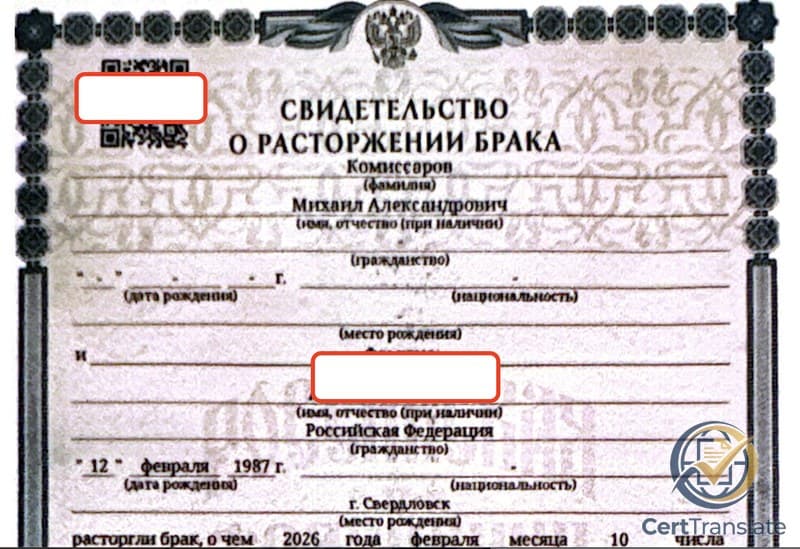
Russia · registry convention
The registry fills the second spouse’s block differently by convention. We showed the blanks as blanks and explained the form in a translator’s note, so nothing read as missing evidence.
Read the case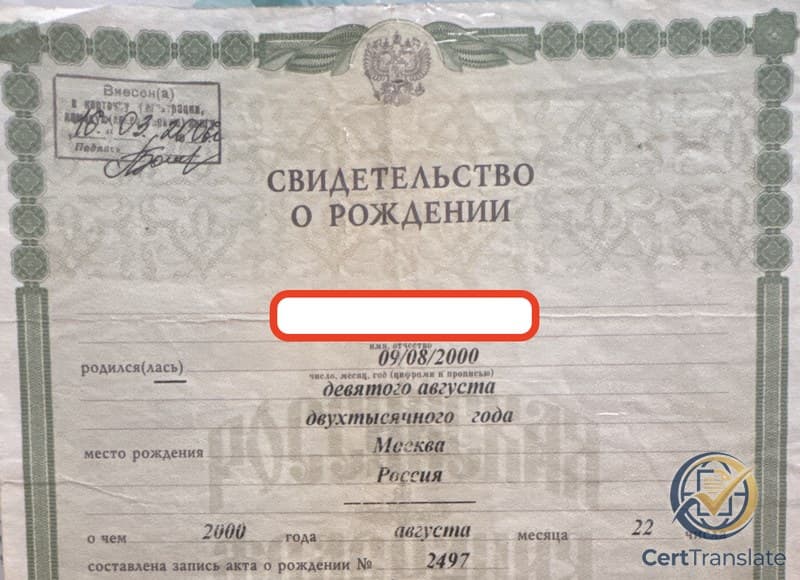
Russia · field pairs
Russian forms label гражданство and национальность separately. We translated each to its own English label instead of collapsing both into one nationality line.
Read the case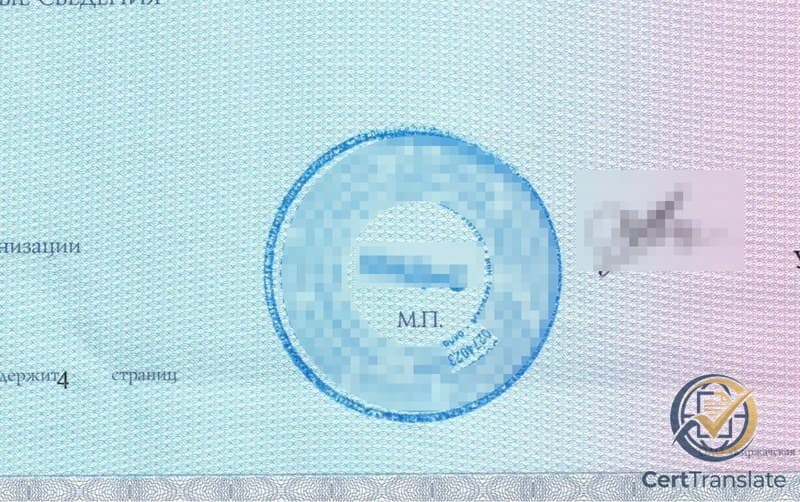
Russia · illegible seal
We recovered the digits from the number’s own check pattern rather than guessing, and marked what stayed unreadable instead of inventing it.
Read the caseWhich record proves the divorce
Russia splits the divorce across two offices: a court can grant it, and ЗАГС records it. Which paper you hold depends on that route. We name the record as issued.
ЗАГС issues the свидетельство о расторжении брака. It names both former spouses, the act record number, the registry office, and the date the divorce was recorded.
It also states the surname each spouse carries after the divorce. That line is what connects a maiden name on an old record to the name on a current passport.
If you hold the свидетельство, upload it first. Add the court decision when your USCIS notice, attorney, or receiving office asks for the ruling too.
Where a court granted the divorce, the marriage ends on the day the decision enters legal force, not on the day it was announced. ЗАГС then registers it and issues the certificate.
So a court file can carry two dates that both look final. We label the ruling and the entry into legal force separately rather than choosing one.
ЗАГС does not hand out duplicate copies freely. A повторное свидетельство is issued to replace an original that was lost or destroyed, and it is marked as such.
We translate that marking rather than hiding it. A reviewer who sees an unexplained second certificate asks why there are two.
Divorce records from the Soviet period use different form names, different offices, and often handwriting across the whole entry. Republic names and city names have changed since.
We translate the form as printed and name the office as it was then, so the old record and a modern one can be read as one identity chain.
How it works
Upload the record first. We name the document, confirm the full page set and the price, then translate, check, and certify it.
Send the свидетельство, the court decision, any settlement agreement, the apostille, and any back sides. Add the USCIS notice or checklist that names what they asked for.
A Russian specialist translates the registry or court text. A second reviewer checks both surnames, the patronymics, the act record number, and every date.

Ask for fixes before we certify. You then get the source copy, the full English translation, and the signed and stamped Certificate of Translation Accuracy.
How much does a Russian divorce translation cost?
No 250-word cap on dense court pages.
Certified price
$24.95/ page
No payment until file review
Client reviews
Ekaterina M.
Brooklyn, NY
“They translated my Russian divorce certificate with perfect patronymic handling for both former spouses. My surname reversion to my maiden name was clearly noted, and USCIS accepted the I-130 packet without an RFE.”
Russia · Свидетельство with surname reversion
I-130 packet accepted
Andrey V.
Portland, OR
“My divorce was granted by a Russian district court and the decision was 6 pages with detailed property and custody provisions. CertTranslate translated every provision in full, and my family attorney confirmed it was what the U.S. court needed.”
Russia · Six-page court decision
Every provision translated
Marina T.
Houston, TX
“I had a Soviet-era RSFSR divorce decree alongside my modern Russian marriage certificate. They coordinated the names, patronymics, and institutional references across both, so the identity chain was clear for USCIS.”
Soviet-era RSFSR decree with a modern record
Identity chain clear for USCIS
Questions before ordering
The translation rule is always the same: file the Russian evidence with a full certified English translation. Which record proves the divorce depends on whether a court or ЗАГС granted it.
The price is $24.95 per physical page, with no word cap. A свидетельство is usually one page. A court decision can run several. We confirm the count before you pay.
Most one- to three-page orders arrive within 24 hours. For long court decisions, and for files with dense handwriting, we confirm a delivery time before we start.
Your package holds the source copy, a full English translation, and a signed and stamped Certificate of Translation Accuracy. If USCIS raises a translation issue, we revise it free. That does not replace holding the right record in the first place.
It depends on the route and on what you were asked for. ЗАГС issues the свидетельство after a divorce is recorded; a court file also carries the ruling itself. Upload both if you have them, and we will name them before you pay.
Use the date the form asks for, if the record backs it up. A court divorce ends the marriage when the decision enters legal force, and the registry entry can be later. The translation labels each one.
Yes. Soviet-period records use older form names, offices that no longer exist, and often handwriting throughout. We translate the form as printed and name the office as it was then.
We follow the spelling in your passport when you send it, because that is the spelling the rest of your packet uses. Without a passport we apply a single transliteration standard and say so in a note.
No. ЗАГС issues a повторное свидетельство to replace an original that was lost or destroyed. We translate the marking rather than hiding it, so nobody has to guess why a second certificate exists.
USCIS generally asks for a certified English translation, not a notarized one and not an apostille. A court, consulate, or foreign office may set its own rules, so follow that recipient’s checklist.
No. Translation makes the record readable. It does not decide whether a U.S. state recognizes the divorce. That can turn on state law, jurisdiction, notice, and how the case ran abroad. Ask the receiving office or a lawyer.
What we check before certification
These issues come up again and again in Russian marital-history packets. The translation should show the names, the dates, and the record type, not leave the officer to work them out.
Our check: We label both. A court divorce ends the marriage when the decision enters legal force, and a remarriage timeline rests on that date.
Our check: Russian forms leave parts of the second spouse’s block empty by convention. We show blanks as blanks and explain the form rather than filling gaps.
Our check: They are separate fields on the form and mean different things. We keep citizenship and ethnicity apart in English.
Our check: We cross-check both spouses, the patronymics, the act record number, and every repeated date before we certify.
The standard behind these checks
AcceptReady™ is CertTranslate's published standard for certified translations: complete word-for-word translation, mirrored page layout, signed and stamped Certificate of Accuracy on letterhead, and matched to the receiver's published requirements.
How to check each one yourselfChecked before certification. If an authority later requests a translation-related correction, revisions remain free.
Start my translationCommon USCIS contexts
USCIS reads divorce evidence to see whether an earlier marriage ended lawfully, and whether both people were then free to marry again.
Send the Russian record together with its certified English translation. The translation must not replace the source, shorten it, or quietly fix it.
Proof that an earlier marriage ended supports the current marriage in a family-based case.
Both parties must show that prior marriages ended and that they are legally free to marry.
USCIS asks for records showing an earlier marriage ended lawfully. A name change on the form has to be evidenced too.
Which civil record counts, and whether it needs a stamp, follows the destination’s own checklist.
Document glossary
These terms often show up together, but they name different documents, offices, or stages of the divorce.
Reference library
Guidance and source links last rechecked .
Ready when you are
Send what you have: the свидетельство, the court decision, a settlement agreement, or an apostille. We confirm the record type, the page count, the price, and when it will be ready.
No payment until file review
