Who needs a certified passport translation?
USCIS and immigration filings
If you are filing Form I-485 (Adjustment of Status), Form I-130 (Petition for Alien Relative), or Form N-400 (Naturalization), USCIS requires certified passport translation for any submitted non-English page.
For passports, this often means the identity bio page plus specific visa, entry, or endorsement pages relevant to your filing.
Expired passports can still be translated and used as historical identity evidence when they are part of the document packet.
University and employment verification
Some schools and employers request translated passport identity pages to confirm legal name and date-of-birth consistency.
A certified translation is especially useful when your academic or employment records use a different transliteration style.
Submitting a clean certified copy can reduce back-and-forth during onboarding and document review.
Court and legal proceedings
Courts may request certified translation of passport pages when identity proof is part of a filing record.
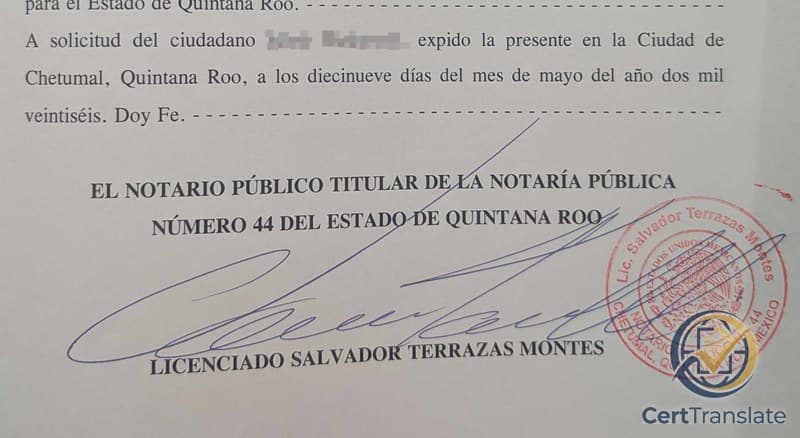
Depending on jurisdiction, notarization may be required in addition to certification, but this is destination-specific.
Keeping scope limited to relevant pages controls cost while still meeting evidentiary requirements.
Consular, emergency travel, and laissez-passer cases
Emergency travel documents and laissez-passer records can also require certified translation for administrative processing.
These documents are niche but high-risk for errors because field labels vary by issuing authority.
We translate exact source wording and preserve document identifiers so receiving offices can verify entries quickly.
What you get with every certified passport package
Delivery Promise
Passport files are scope-sensitive. Most users do not need the entire booklet translated, but they do need every relevant field on the pages they submit. We preserve passport numbers, issuing authority details, visa annotations, and official stamps exactly as shown so reviewers can verify identity without ambiguity. Our passport translation services include page-scope checks, MRZ-to-bio consistency review, and visa-page annotation coverage.
Passports by country of origin
Mexico
Mexican passports often include bilingual fields, but supporting visa and endorsement pages may still require full certified translation.
Name components and accent marks must be preserved exactly to avoid mismatch against civil records and USCIS forms.
Entry and exit stamp notes are translated when those pages are submitted as timeline evidence.
If an older passport is expired, it can still be translated when it supports travel history or identity continuity.
Mexico is a Hague Apostille Convention member, so apostille is the standard legalization route when non-U.S. authorities request it.
Our QA process checks passport number, issuing authority, and date fields character by character before delivery.
China
Chinese passports frequently involve transliteration differences between source script, pinyin, and other identity documents.
We preserve source spelling and flag potential mismatches against provided U.S. filing records before final delivery.
Relevant visa page annotations and entry notes are translated in full when they are part of the submission packet.
MRZ lines are not treated as decorative text; we verify core identity fields against bio page entries for consistency.
China is a Hague Apostille Convention member, so apostille is commonly used when legalization is required outside USCIS workflows.
If multiple passports are submitted, each document scope is separated clearly so reviewers can track chronology.
India
Indian passports often include clear English bio fields, but associated visa endorsements and handwritten notes may still require translation.
We translate submitted non-English entries exactly and keep passport identifiers unchanged across all translated pages.
If place names or parent names vary across documents, we preserve source wording and flag consistency risks for review.
Expired passport pages can still be translated when they are needed to show prior identity or travel history.
India is a Hague Apostille Convention member, so apostille is typically used for non-U.S. legalization requests.
Destination-specific notarization is added only when required, so users avoid unnecessary extra steps.
Russia
Russian passports may present patronymic structures and transliteration variants that must remain source-accurate in translation.
We do not normalize names silently to match other records, because silent edits create compliance risk.
Relevant visa pages and border annotations are translated when they support filing timeline evidence.
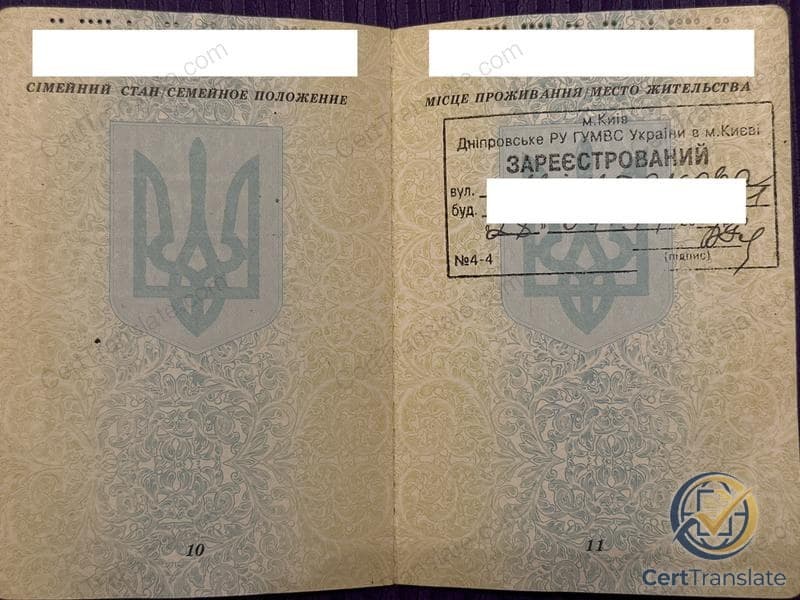
Official stamps and handwritten officer notes are included, with [illegible] markings only where source text cannot be read confidently.
Russia is a Hague Apostille Convention member, so apostille is generally used when legalization is requested for non-U.S. filing destinations.
Document numbering and issuance entries are double-checked before certification release.
Saudi Arabia
Arabic-script passports require careful transliteration alignment with existing passport and immigration record spelling.
We translate right-to-left field content in a structured format that keeps labels and values clearly mapped for reviewers.
Visa and endorsement pages with Arabic notes are translated fully when those pages are included in submission scope.
Emergency travel documents and temporary identity papers from the same authority can also be translated in certified format.
Saudi Arabia is a Hague Apostille Convention member, so apostille is typically used when legalization is required by non-U.S. authorities.
Our QA checks include name order consistency and date-field verification across every translated page.
“Passport translation errors usually come from wrong scope and name inconsistencies. We confirm required pages first, then verify all identity fields before certification.”

How to get your passport translated, step by step
Step 1: Upload the passport pages you plan to submit
Upload clear images of the bio page and any visa or endorsement pages relevant to your case.
Do not guess scope if unsure; we can confirm which pages are typically needed before production.
If you have an expired passport that supports identity history, upload that page set too.
Step 2: Scope and compliance review
We confirm legibility, page count, and translation scope before billing.
If a page appears unnecessary, we flag it so you do not pay for avoidable translation.
If a required page is missing, we request it before work starts to prevent rework.
Step 3: Translation and certification
A professional translator renders each submitted page exactly, including stamps and handwritten notes.
Identity fields are cross-checked for consistency across bio and supporting pages.
Certificate of Accuracy is signed and attached with translator credentials.
Step 4: Delivery and revision support
You receive a certified PDF package, usually within 24 hours for standard scope.
If USCIS, court, or agency requests formatting adjustment, revisions are included.
Notarization and hard-copy mailing are available when your destination requires them.
Your passport files are transmitted with 256-bit SSL and stored on secure infrastructure. We delete uploaded files within 30 days of delivery or sooner upon request.
Passport translation cost
$24.95
per page (up to 250 words)
Typical length
Most passport orders are 1-3 pages
Typical cost
Typical total is $24.95-$74.85
Cost Estimation
Always Included
No hidden fees. Pay upon review.
How we count pages
The bio page is usually one page.
Each additional visa or endorsement page submitted for translation counts as an additional page.
Exact total is confirmed after scope review and before payment.
Common mistakes that get translated passports rejected
1Translating the wrong pages or missing required pages
Risk
Submitting incomplete or irrelevant scope can trigger follow-up requests and delay adjudication.
Our Solution
We confirm required scope before production so you translate only what is needed for your destination.
2Ignoring name transliteration mismatches across documents
Risk
Identity mismatches between passport, forms, and supporting records can trigger RFEs or manual review delays.
Our Solution
We preserve source spelling and flag mismatch points so they can be addressed before submission.
3Omitting visa annotations, stamps, or handwritten notes
Risk
Missing these details can make timeline evidence incomplete or inconsistent.
Our Solution
Every visible element on submitted pages is translated, including stamp text and officer notes.
4Assuming expired passports cannot be translated
Risk
Applicants may omit useful identity history evidence and weaken their packet unnecessarily.
Our Solution
Expired passports are translated when relevant and clearly labeled by issuance period.
5Submitting without a signed Certificate of Accuracy
Risk
Authorities may reject otherwise accurate translation as non-compliant.
Our Solution
Each order includes signed certification and translator identity details.
Our track record for translated passports
Identity documents translated since 2014
Service history
USCIS filings, court identity proof, licensing, employment verification
Common use cases
90+ languages
Language coverage for passport records
Passport files are one of our highest-volume identity workflows and account for roughly one in five ID-document orders. Our quality checklist includes page-scope validation, MRZ/bio consistency checks, and visa-page annotation verification before release. We run this workflow across 90+ language pairs from 100+ countries.
What customers say about our translated passports
“They told me I only needed the bio page and one visa page, not the whole passport. USCIS accepted the translation and I saved both time and money.”
Hector M.
Phoenix, AZ
Verified on Google
“My passport was expired but needed for travel history evidence. Translation was precise and my attorney used it without any edits.”
Lina S.
Orlando, FL
Verified on Trustpilot
“They flagged a name spelling mismatch between my visa page and passport bio page before I submitted. That catch probably saved me a delay.”
Arman K.
Seattle, WA
Verified on Google
“Fast turnaround, clear formatting, and complete certification page. Court accepted the translated passport pages on first submission.”
Dina R.
Chicago, IL
Verified on Google
Often submitted together with passport records
Birth Certificate Translation
Used to support identity and family relationship evidence in immigration packets.
Marriage Certificate Translation
Frequently paired for spouse petitions and name-history verification.
Driver's License Translation
Useful for state-level identity and licensing workflows requiring translated ID records.
Submitting multiple identity documents? Upload them in one order for one coordinated delivery package at the same $24.95/page rate.
Where This Document Is Used
Immigration & Filing
Frequently asked questions
Everything you need to know about getting your document translated appropriately.
How much does a certified passport translation cost?
Certified passport translation starts at $24.95 per page for up to 250 words. Most clients translate one to three pages, so common totals are $24.95 to $74.85 depending on scope. Cost increases when additional visa, endorsement, or stamp-heavy pages are included in the submission packet. We confirm final page count before billing, so you know the exact total in advance. Optional services like notarization, rush turnaround, and hard-copy mailing are listed separately. The most accurate quote comes from uploading every page you plan to submit, even if you are unsure whether each page is required. Sharing all candidate pages upfront keeps pricing accurate from the start.
How long does passport translation take?
Most passport orders are delivered within 24 hours after scope and legibility review. Complex files can take 24 to 48 hours when multiple visa pages, dense annotations, or unclear scans require additional quality checks. We confirm timing before production starts so you can plan filing steps around a real schedule. If you have a strict USCIS, court, or agency deadline, include that date in your order notes and request rush handling early. Uploading clear full-page images and close-ups of unclear stamps is the fastest way to avoid delays caused by rework or missing details discovered during QA. Providing complete scope upfront is the simplest way to keep turnaround predictable.
Will my translated passport be accepted by USCIS?
USCIS generally accepts passport translations when submitted pages are translated completely and include a signed certification statement. Our package includes line-by-line translation of each page in scope, Certificate of Accuracy, and translator identity details. Rejections usually happen when applicants translate only part of a required page, omit annotations, or submit inconsistent name spellings across records. Before filing, compare passport details against forms and supporting civil documents so your packet is consistent. If you also submit birth or marriage records, translating those together can reduce mismatch risk and prevent avoidable follow-up questions during review. Complete scope and certification are what officers expect on first review.
Do I need my passport notarized?
For many USCIS scenarios, notarization is usually not required and certified translation is sufficient. Some courts, licensing boards, and foreign authorities may still request notarization as an additional legal formality. Certified translation confirms content accuracy, while notarization confirms signer identity on the certification statement. These are separate requirements and should be selected based on destination instructions. If you submit documents to multiple institutions, list each destination before ordering so you do not miss a requirement for one reviewer or overpay for services that are not needed. Written destination guidance is the safest basis for choosing the correct package. Ask for requirements in writing whenever possible before you order.
What if my passport scan is damaged, faded, or partially unreadable?
Damaged or faded passport pages can still be translated when key fields are legible. We translate all readable content and mark unreadable portions as [illegible] when text cannot be recovered reliably. This protects accuracy and avoids guessing that could create compliance risk. Before production, we review scan quality and request better images if critical data cannot be confirmed safely. You can speed the process by sending both a full-page image and close-up photos of unclear areas, especially stamps, endorsement notes, and document numbers. If you have multiple scans of the same page, include all versions for cross-checking. This helps us certify difficult pages without risking transcription errors.
Can I translate my own passport for USCIS?
Self-translation is usually risky for USCIS and other official workflows because authorities expect third-party certified translation with clear accountability. Even fluent applicants can miss field-level details, annotations, or certification formatting elements required in formal review. If self-prepared translation is questioned, you may need to reorder and resubmit under deadline pressure. Professional certified translation reduces that risk by including signed certification, translator identity details, and quality checks for consistency across submitted pages. This is especially important for passports because identity mismatches can affect multiple parts of a filing packet, not just one document page. Independent certification is the safest option for time-sensitive filings.
What is the difference between certified and notarized translation?
Certified translation includes the translated pages plus a signed statement that the translation is complete and accurate. Notarization is a separate legal step that verifies the identity of the person signing that statement. Notarization does not replace translation quality and does not make an incomplete translation compliant. Many destinations request certified translation only, while some request both certified and notarized versions. The practical approach is to confirm destination rules first, then order only what is required. If notarization is requested later, it can usually be added without redoing translation content from scratch. That sequence avoids both unnecessary cost and compliance gaps.
Do I need an apostille for my translated passport?
Passport translation for USCIS usually does not require an apostille. Apostille is a separate legalization step used when non-U.S. authorities request authenticated identity documents under Hague Convention procedures. If your destination asks for certified translation only, apostille is not a substitute for the Certificate of Accuracy. If both are requested, complete certified translation first and then follow destination legalization instructions. For non-Hague destinations, consular authentication may apply instead of apostille. Written destination requirements should always guide the final package. Confirming this sequence before ordering helps avoid unnecessary legalization costs and deadline delays. Always verify country-specific rules directly with the receiving authority.
Do I need to translate my entire passport or only specific pages?
In most cases, you only need to translate specific passport pages that are relevant to your submission, not the full booklet. This commonly includes the identity bio page and selected visa or endorsement pages used as evidence. Translating unnecessary pages increases cost and can slow processing without improving compliance. We review your use case first and confirm scope before production starts. If destination instructions are unclear, use the requirements checker or provide the request notice from the receiving authority. Defining page scope correctly is one of the most effective ways to prevent delays and keep your submission efficient. Scope confirmation before translation is the main cost-control step.
Can an expired passport still be translated for official use?
Yes, expired passports can still be translated when they are relevant to identity history, travel chronology, or supporting evidence requirements. Expiration does not make the document untranslatable. What matters is whether the receiving authority accepts it as evidence in your case context. We translate the page exactly as issued and clearly preserve issuance and expiration details in the certified output. If you also have a newer passport, include both documents so field consistency can be reviewed before submission. This helps avoid contradictions between current and historical records and reduces the chance of follow-up requests. Historical passports are often useful when identity history must be documented.
Ready to get your passport translated?
Upload the required passport pages now and get a certified, submission-ready package, usually within 24 hours.