

CertTranslateCertTranslate
Certified translations for WES, ECE, and admissions teamsNative-speaking credential specialistsLayout-mirroring format for evaluatorsUnlimited revisions if an evaluator asks for a translation fix
Live Support Specialists Available

Russian Transcript Translation

Native Russian speakers | Russian grading-scale expertise | WES-ready layout | 24-hour delivery

Avoid Rejections
Evaluator-ready format
24-Hour Turnaround
Natalia Vega

Reviewed by Natalia Vega

Senior Certified Translation Reviewer • ~2 min response

Russian transcript translation produces a certified English version of приложение к диплому, академическая справка, and other Russian-language academic records from Russia, Soviet-era institutions, Kazakhstan, Belarus, and other CIS countries, formatted for WES, ECE, university admissions, and licensing boards [Source: WES Required Documents, Country-Specific Requirements].

A modern Russian university transcript, a Soviet-era diploma supplement, and a Russian-language academic record from Kazakhstan or Uzbekistan may share a language but differ in grading scales, course numbering systems, and institutional formatting enough that the translation has to reflect the exact issuing system rather than forcing everything into one template.

Your transcript is translated by a native Russian speaker who handles academic records daily, so course titles, credit-hour structures, five-point grading scales, Cyrillic romanization, and evaluator-facing layout are reviewed in one workflow rather than piece by piece.

If an evaluator asks for a translation-only correction, we revise the file at no extra cost so the English transcript stays aligned with the original academic record and the rest of the credential packet.

Core Differences

What Makes Russian Transcript Translation Different

Russian transcript translation requires handling five-point grading scales, Cyrillic course titles that do not have standard English equivalents, Soviet-era versus Bologna-era program structures, and the relationship between the transcript and the diploma it supplements — challenges that sit at the intersection of Russian language expertise and academic-record formatting.

01

Russian grading scales do not map directly to U.S. systems

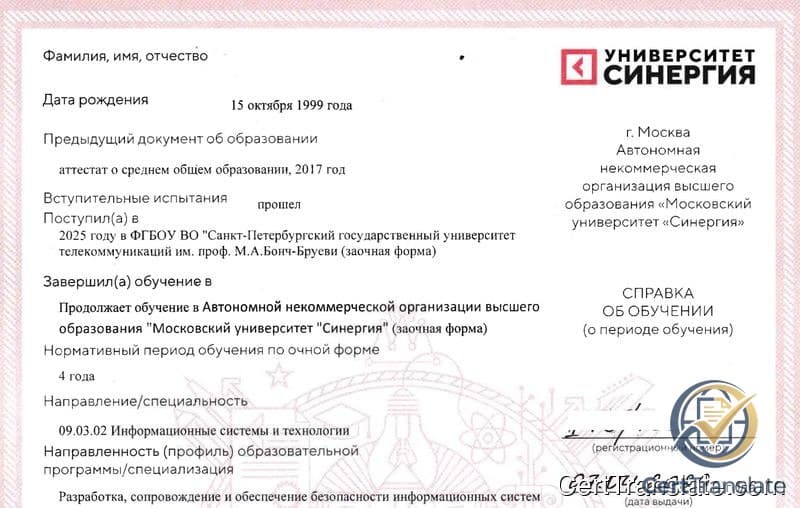
Russian academic records typically use a five-point grading scale (отлично, хорошо, удовлетворительно, неудовлетворительно, and sometimes зачет/незачет) that evaluators need to see exactly as issued before they apply their own equivalency framework.

Over-translating Russian grades into U.S. letter-grade equivalents is risky because the evaluator’s job is to decide how the original grading system maps to the target system. The translation should faithfully render the grade labels and any grading legend or key that the institution printed on the record.

02

Course titles require subject-matter accuracy, not word-for-word guessing

Russian academic transcripts list course titles in Cyrillic that may reference specialized fields, laboratory sequences, practicum components, or discipline-specific terminology. A translator without academic-record experience may produce English course names that sound wrong to an evaluator who knows the field.

Each course title is translated with the subject context in mind so the English version reads like a real academic offering rather than a mechanical word swap. When a standard English equivalent exists, we use it; when one does not, we translate descriptively and preserve the original title in parentheses.

03

The transcript and diploma often need to work as one evaluated set

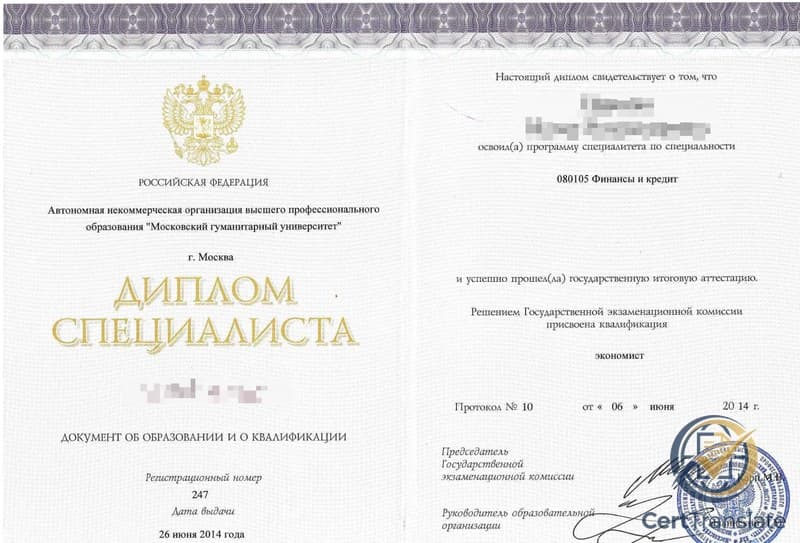
Many evaluator workflows, especially WES, review the diploma and the transcript together to understand the full credential. The same Cyrillic romanization, degree title, and institution name have to appear consistently across both documents.

When the diploma and transcript are ordered together, we translate them as a coordinated set so terminology, name spelling, and institutional references carry through. For WES applications, translations can typically be uploaded in the applicant account while official academic documents still follow the Required Documents instructions from the institution.

04

Soviet-era and post-Bologna transcripts use different structures

Soviet-era transcripts may list courses by year rather than semester, use different credit or hour calculations, and reference academic programs and institutional designations that no longer exist. Post-2003 Bologna-process transcripts follow a different structure with ECTS-style credit annotations and bakalavr/magistr terminology.

The translator has to recognize which era and system the transcript reflects before choosing the English framing. Getting the academic vocabulary wrong for the period misleads the evaluator, so the translation should match the actual record structure rather than projecting modern terms onto a legacy document.

Country Variants

Transcript Translation by Russian-Language Issuing System

These academic records share Russian as the document language, but the grading system, credit structure, and institutional conventions change by country and era.

Modern Russian university transcripts follow a standardized format listing courses by semester or year, with grades on the five-point scale, credit hours or academic hours, and an institutional registrar seal. Post-Bologna transcripts may include ECTS credit equivalents and bakalavr or magistr program labels.

These records appear most commonly with WES and ECE evaluations, university admissions, and professional licensing reviews. We preserve the grading legend, institutional seal references, and the full course list without abbreviating or reordering entries, so the evaluator can read the transcript as the issuing institution intended.

Soviet-era academic records may use year-based course listings, different hour-counting methods, and institutional names that no longer exist. The supplement (приложение к диплому) from this period often serves as the transcript and carries all course, grade, and program information.

These records still appear regularly in evaluation packets. The translation must preserve the original course structure, year-based layout, and institutional references without modernizing them. When a translator note is helpful, it clarifies the legacy context rather than overwriting the source terminology.

Russian-language academic transcripts from Kazakhstan may use a similar grading scale but with institutional naming, credit structures, and regulatory references that reflect the Kazakh academic system rather than the Russian one. Bilingual Russian-Kazakh transcripts may appear, especially from post-independence institutions.

We keep the Russian-language academic terminology intact while making the country and institutional context clear for evaluators. When the transcript is part of a larger credential set, we ensure consistency across the diploma, transcript, and any supplementary academic documents.

Belarusian academic transcripts may appear heavily in Russian. The grading system is similar to Russia’s five-point scale, but institutional naming conventions and regulatory references reflect the Belarusian academic system.

These records often appear alongside diplomas and other academic documents in evaluation packets. We keep the translated terminology consistent across the full academic set and preserve institutional naming as printed on the original record.

Filing Context

When You Need Russian Transcript Translation

Most clients need this service for credential evaluation through WES, ECE, or similar agencies. University admissions offices and professional licensing boards also commonly require translated transcripts when the applicant holds a Russian-language academic record [Source: WES Required Documents, Country-Specific Requirements].

The same translation is useful when an employer, government agency, or immigration attorney needs to understand the applicant’s academic background. The transcript should preserve the original course structure, grading system, and institutional details so the evaluator can assess the record against their own equivalency framework.

Deliverables

What Your Certified Russian Transcript Translation Includes

Word-for-word translation of all courses, grades, credit hours, and registrar notations
Grading legend or key translated alongside the course list so evaluators understand the scale
Cyrillic-to-Latin romanization of student name matched to passport or diploma
Course titles translated with subject-matter accuracy, not word-for-word guessing
Signed Certificate of Accuracy on company letterhead
Layout-mirroring format for evaluator-facing review
Unlimited revisions if an evaluator requests a translation-only update

Combo-specific detail

For Russian transcript translation, we preserve the five-point grading scale labels exactly as issued, translate course titles with subject-matter accuracy, and keep the romanized student name and institutional references consistent across the diploma-transcript set.

Transparent Pricing

Russian Transcript Translation Cost

$29.95

per page (up to 250 words)

Typical length

Most Russian transcripts are 2 to 6 pages depending on program length

Typical total

$59.90

Service Details

  • Short undergraduate transcripts are often 2 to 3 pages.
  • Specialist or graduate transcripts with multiple years of coursework may run to 5 or 6 pages.
  • Soviet-era diploma supplements that serve as transcripts follow the same per-page pricing.
  • Notarization available ($19.95)
  • USCIS 100% Acceptance Guarantee
Find Your Real Price

No hidden fees. Free Quote.

Verified Reviews

What Customers Say About Our Russian Transcript Translation

4.9/5From 2,400+ reviews

My Russian university transcript had specialized engineering course titles that previous translators got wrong. CertTranslate translated them with actual subject-matter understanding and WES accepted the packet.

P

Pavel M.

Seattle, WA

I had a Soviet-era diploma supplement that served as my transcript. They preserved the year-based course layout and the five-point grades exactly as printed. The evaluator had no issue with the format.

E

Elena T.

Houston, TX

My transcript and diploma needed to match for WES. CertTranslate translated both as a set and kept the course titles, name spelling, and institution name consistent across the documents.

A

Andrey L.

Boston, MA

Common Questions

Russian Transcript Translation - Common Questions

How much does it cost to translate a Russian transcript?

Russian transcript translation costs $24.95 per page. Most clients pay between $49.90 and $149.70 because Russian transcripts typically run 2 to 6 pages depending on program length and coursework volume. You receive the confirmed page count before payment, and there is no language surcharge for russian.

How long does it take to translate a Russian transcript?

Most transcript orders are delivered within 24 hours once we receive clear scans. Longer transcripts with extensive course lists or Soviet-era formatting may take additional time, but we confirm the delivery window before production starts.

Will my russian transcript be accepted by WES or another credential evaluator?

Yes. This service is built for credential evaluators, university admissions teams, licensing boards, and USCIS when academic evidence needs a complete certified English translation that preserves grading scales, course titles, and institutional formatting. Our package includes the full English translation plus a signed Certificate of Accuracy, which is the format most receiving authorities expect for foreign-language records.

Do you translate transcripts from all russian-speaking countries?

Yes. We handle transcripts from Russia, Soviet-era issuers, Kazakhstan, Belarus, and other Russian-language academic systems, with the translation matched to the exact issuing context rather than forced into a single generic template. If your record uses a rare regional format, upload every page so the translator can match the exact issuing-country structure before production starts.

What if my russian transcript is handwritten or hard to read?

We can usually translate scanned transcripts if the text, grades, and registrar seal remain readable. If a course title, grade entry, or institutional reference is too faint or cut off, we ask for a better scan before we certify the file. When a field is genuinely unreadable, we mark it transparently instead of guessing, which is safer than inventing a name, date, or registry number.

Do I need to translate my Russian transcript separately from my diploma?

If your evaluator reviews both the diploma and the transcript, ordering them together is usually better. We translate the pair as a coordinated set so course titles, the student name, and institutional references stay consistent across both documents. For WES applications, translations can typically be uploaded in the applicant account while official academic documents follow the Required Documents instructions.

How do you handle Russian grades like отлично and зачет?

We translate the grade labels exactly as issued on the original record and include any grading legend or key printed on the transcript. We do not convert Russian grades to U.S. letter-grade equivalents because that is the evaluator’s job. Preserving the original grading language gives the evaluator the information they need to apply their own equivalency framework.

Ready to order

Ready to Translate Your Russian Transcript?

Upload the full transcript, including any grading legend, registrar certification page, and explanatory notes. Evaluators rarely accept a partial course list without the grading context that gives it meaning.

If your packet also includes a diploma or other Russian academic documents, order them together so course titles, the student name, and institutional references stay consistent across the translated set.

24-hour deliverySecure upload