
1
Current official WES rule
WES says translations must be exact, word-for-word, clear, legible, and completed by a professional translator.
Independent translation service for WES submissions
If your WES account asks for a translation, we prepare a complete, word-for-word academic translation with preserved tables, seals, notes, and a signed Certificate of Accuracy. WES U.S. uses English; WES Canada accepts English or French.
WES-bound academic translation in 24 hours
Requirements coverage
Separates WES translation rules from WES sender-route rules
Submission guidance
Focused on receiver-side review, not generic academic translation advice

We check your files and confirm the total before you pay
Not sure what WES needs? Free requirements check



CertTranslate is independent and is not affiliated with World Education Services. WES has final authority over document and translation acceptance.
On this page
World Education Services document workflow
WES says translation is not necessary in most cases, and applicants should first check the Required Documents list in their account. If a translation is requested, WES gives three firm rules: it must be exact and word-for-word, clear and legible, and completed by a professional translator. WES also says it does not accept applicant-completed, handwritten, or incomplete translations, and recommends giving the translator access to official documents rather than relying on an unofficial version that may not match.
The other part of WES translation requirements is document scope. For completed academic files, WES commonly needs both the academic record and the final credential evidence shown in the country instructions, not just one page from the set. The India page, for example, expects year-wise or semester-wise mark sheets plus a final or provisional degree certificate. The China page separates academic transcripts from degree-certificate routing, which is another reminder that sending only a diploma or only a transcript is often not enough for a completed degree evaluation.
WES also draws a clear line between translation and source-document routing. The translation itself can be uploaded through the WES account when requested, but the official academic documents may still need to come directly from the issuing institution or an approved country sender. That is why a complete WES submission plan always answers two questions at once: what must be translated, and what must be sent directly to WES through the route listed in your required documents.
WES says translations must be exact, word-for-word, clear, legible, and completed by a professional translator.
WES says unofficial documents or student copies may not match the official versions, so the translator should work from official documents.
For WES evaluations processed in the United States, non-English records need English translation. For WES Canada, records not in English or French need English or French translation.
WES does not publish a decorative template for academic translations, but the safest WES translation format is operationally consistent. Based on our experience with evaluator review, the English file should mirror the source layout closely enough that a reviewer can compare page to page without hunting for fields. That means keeping transcript tables as tables, preserving subject order, carrying grading legends forward, and translating every stamp, signature line, and institutional note that affects interpretation.
Just as important, do not modernize the academic record inside the translation. WES provides the equivalency opinion in its report. Its current report guidance says a Course-by-Course evaluation includes subject-by-subject analysis, converted semester credits, and GPA on a 4.0 scale. That is exactly why the translation itself should not convert a 20-point, 10-point, percentage, or local descriptor system into U.S. GPA terms. Preserve the original grading scale in English and let WES do the evaluator work in the report.
The format should also stay upload-ready. WES says translations can be uploaded in the account as PDF or JPEG, the file size cannot exceed 10 MB, and password-protected PDFs are not accepted. In practice, that means the cleanest WES certified translation package is one source page matched to one translated page wherever possible, with a separate certification page if the packet runs longer.
Original CertTranslate sample
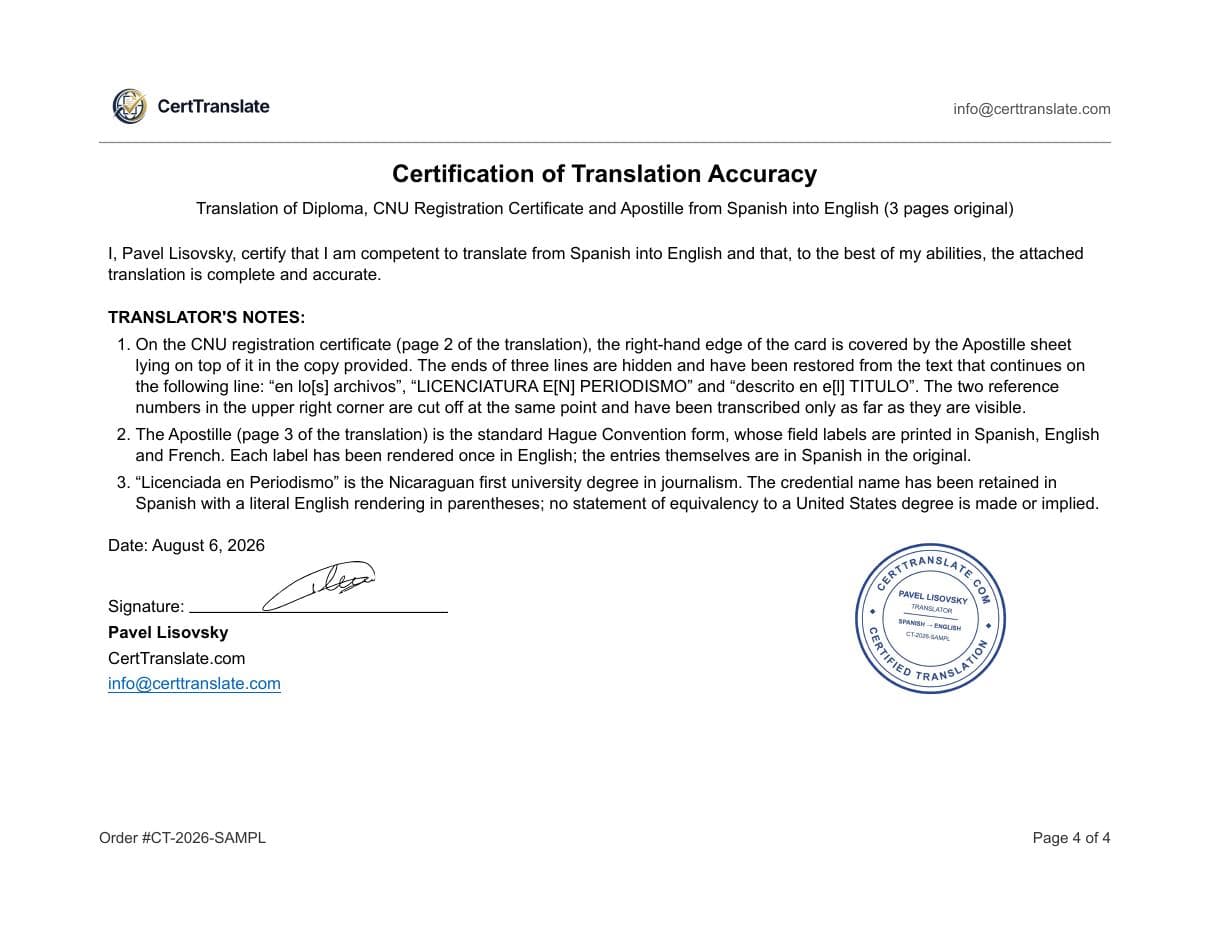
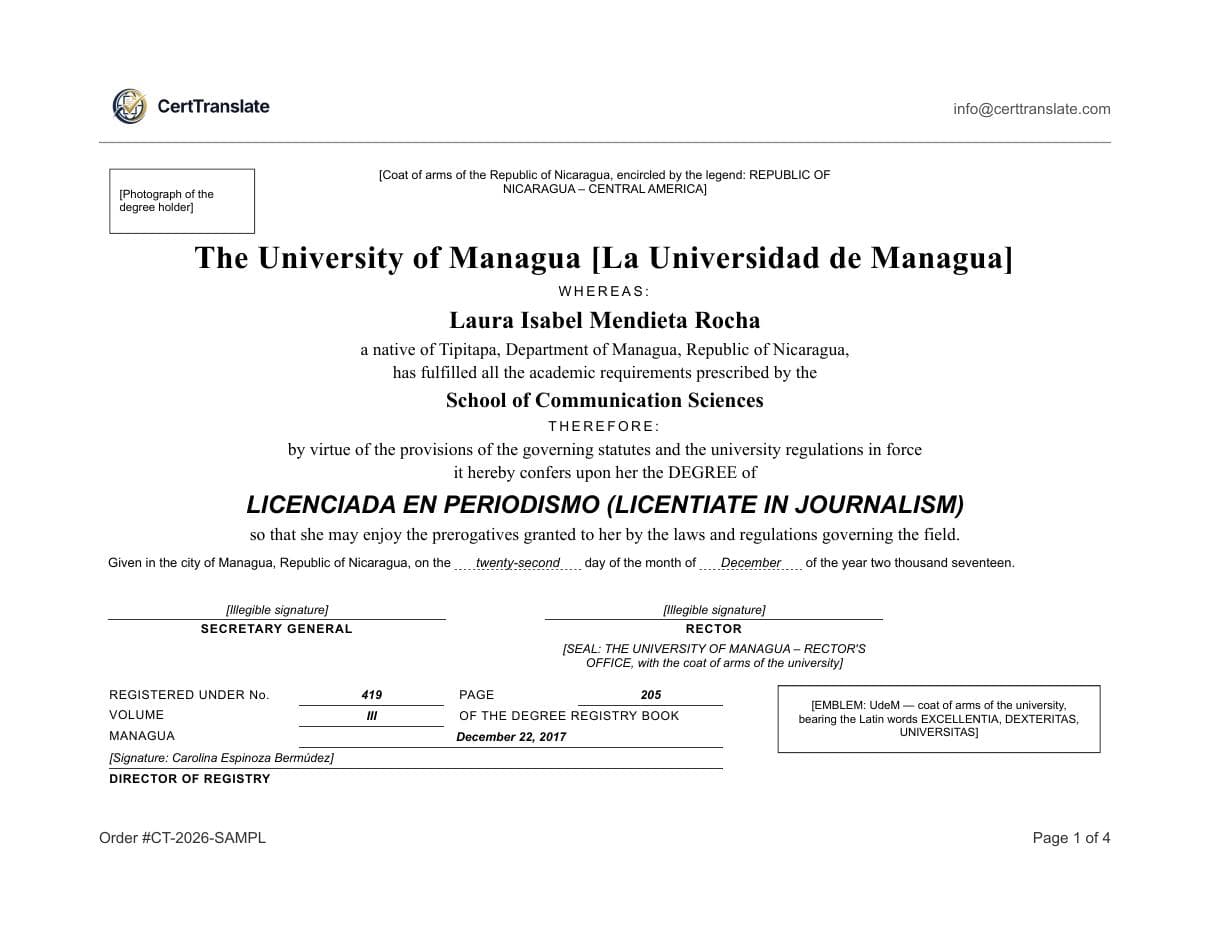
A useful sample should show the deliverable, not decorate the page. This Spanish-to-English diploma package demonstrates the two files a reviewer needs to compare: a structured translation of the academic record and a separate signed Certificate of Translation Accuracy.
WES report types, explained visually
Your certified translation makes the academic record readable; WES chooses the evaluation output based on the report ordered. These original diagrams show the difference without reproducing a real applicant report.
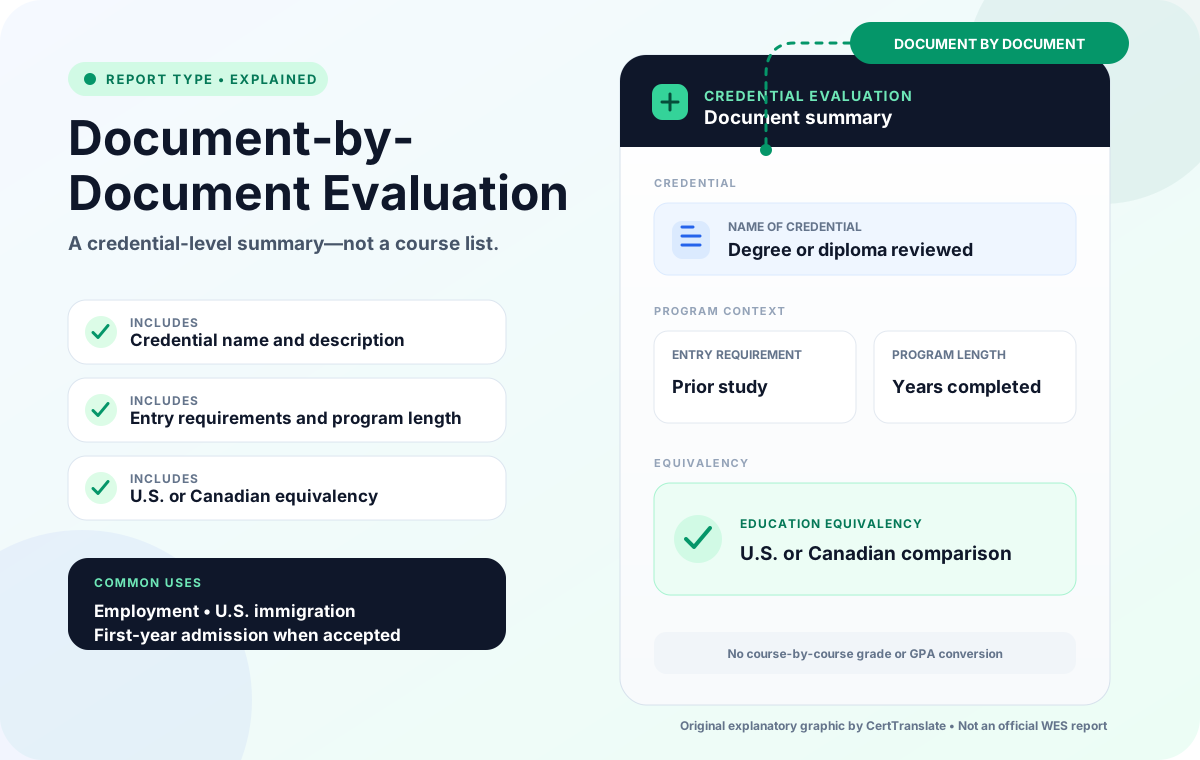
This is a credential-level report. It identifies and describes each submitted credential and gives its U.S. or Canadian education equivalency.
Best for: Employment, U.S. immigration, and first-year admission when the receiving institution confirms this report is sufficient.
Verify the report type on WES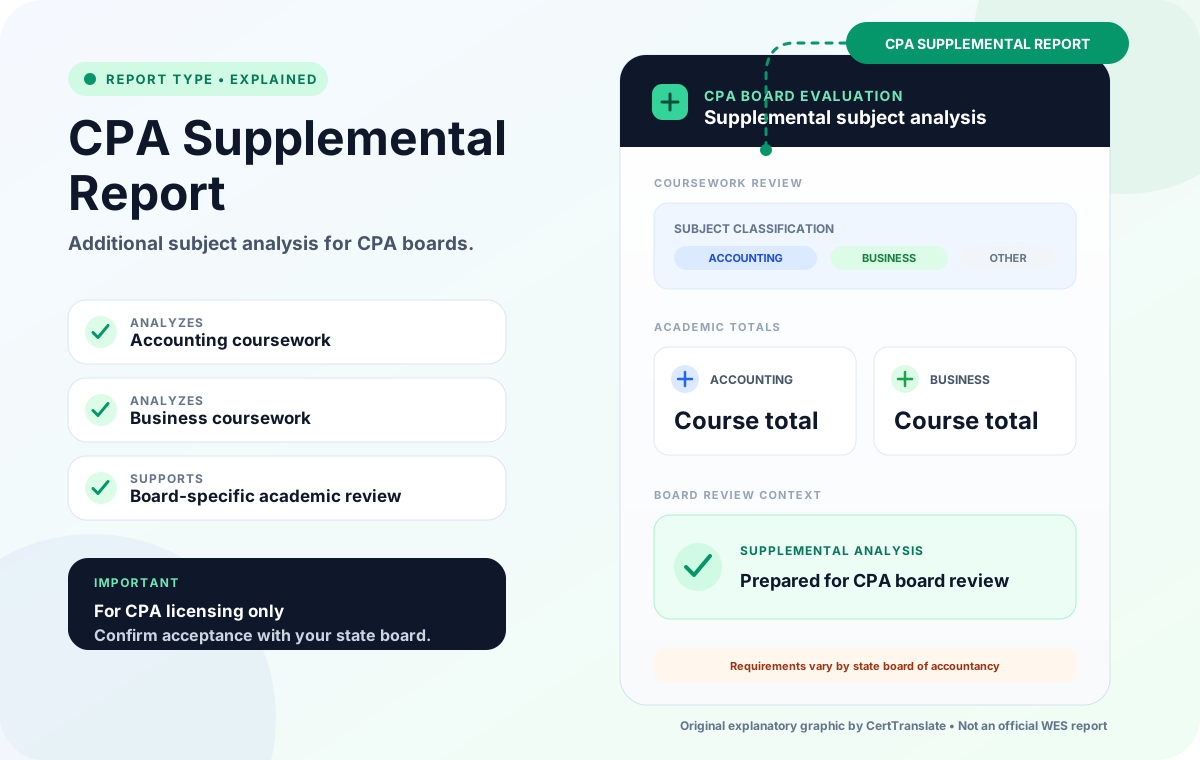
This specialized report adds analysis of business and accounting courses for state boards of accountancy. It is not the standard report for general admission or employment.
Best for: CPA examination or licensing applications when the specific state board accepts a WES evaluation.
Check CPA requirements on WESOriginal CertTranslate explanatory graphics—not official WES sample reports. Report requirements and acceptance vary by institution, employer, immigration pathway, or state board; confirm the required report before ordering.
Clear division of work
The translation should make the original record readable without changing its academic meaning. WES then applies its own evaluation methodology to that faithful record.
WES publishes a professional-translator requirement: the translation must be exact, complete, clear, and not completed by the applicant. Notarization is a separate identity-verification step, not a substitute for translation quality.
These current examples come from official WES country pages and show why translation planning has to follow sender routing. Other countries can use different routes, so always check the required-documents list in your own WES account.
| Country or scenario | Current WES sender route | Why it matters for the translation |
|---|---|---|
| India - degree-granting institution | WES says consolidated transcripts or yearly mark sheets can be accepted when issued by the degree-granting institution and sent in a sealed envelope or through an established digital partnership. | Translate the same complete credential set: the degree or provisional certificate plus the marksheets required for the applicant’s education history. |
| India - verification services | Current WES guidance also describes NSDC digital-wallet verification and Qualification Check as possible routes, depending on the applicant and institution. | Follow the route shown for the specific account; the translation and verified academic record should describe the same credential, names, and dates. |
| China - CSSD verification | WES uses the current Center for Student Services and Development (CSSD) process for Chinese higher-education credential verification; CHESICC is the former name still seen in older instructions. | Keep course names, hours, grades, document numbers, and transcript legends consistent with the record submitted through the current verification process. |
| Any country - account-specific route | WES document requirements vary by country, credential, institution, completion status, and report destination. | Treat the Required Documents list in the WES account as the final routing instruction rather than relying on a generic country article alone. |
If your school or country has a different route, treat that route as the source of truth and adapt the translation set to it before upload.
The fastest WES workflow separates the application step, the sender-route step, and the translation-upload step. When those get mixed together, missing documents surface late and the evaluation timeline stretches for reasons that look mysterious from the applicant side.
WES says its new portal issues a 10-character alphanumeric reference number after payment is completed and received. Save it because WES communications and some sender workflows ask for it.
Use the WES account list to confirm what WES expects for your country, your institution, and your report type. This is where you find out whether WES wants a direct sender route, a translation upload, or both.
Send the translator the same official transcript, marksheet, and diploma pages that match the sender route. Do not work from cropped student copies if the official version has more detail or different wording.
WES says translations can be uploaded through the account. Keep files in PDF or JPEG, stay under the 10 MB limit, avoid password protection, and preview everything before you submit because uploaded files cannot be deleted afterward.
WES current processing guidance splits the workflow in two stages. WES first receives, reviews, and accepts all required documents. After that, the evaluation begins. That is why a missing translation or wrong sender route costs time before the actual evaluation clock even starts.
01
typically 2 weeks after all required documents are received
02
typically 1 week; complex evaluations may take up to 2 weeks
03
typically 2 weeks; complex evaluations may take up to 4 weeks
04
about 24 hours for standard academic records
The WES failure pattern is usually not a dramatic outright denial. More often, WES cannot move the file forward because one translation detail or one sender-route detail does not line up with the review standard.
What happens
WES review stops because the file has only part of the completed credential record, such as marksheets without the final degree certificate.
Why it happens
Applicants focus on the page they think matters most instead of the full record listed in the country instructions.
Safer approach
We review the expected transcript and diploma set before production so the English file matches the actual WES-bound document package.
What happens
The translation does not meet the professional-translator standard and the file needs replacement.
Why it happens
WES explicitly says it does not accept applicant-completed translations, but applicants still assume a fluent relative or self-translation is enough.
Safer approach
Every WES-bound translation is handled as a professional certified workflow, not a casual bilingual rewrite.
What happens
The English file becomes harder to trust because the translator has changed the academic meaning instead of preserving it.
Why it happens
Applicants want the transcript to look more American and assume WES prefers converted GPA or letter grades in the translation.
Safer approach
We preserve the original grading system and let WES handle equivalency, semester-credit conversion, and GPA in the report.
What happens
WES cannot compare the English page cleanly to the official record, so review slows or the translation has to be redone.
Why it happens
Low-detail providers flatten transcript tables into prose and skip registrar marks that look minor but carry institutional meaning.
Safer approach
We keep academic tables intact, translate every visible marking, and match the translation page order to the source set.
What happens
The translation may be fine, but the total WES file stalls because the direct sender route does not match the country instructions.
Why it happens
Applicants treat upload and direct-sender steps as interchangeable even though WES keeps them separate.
Safer approach
We flag sender-route issues up front and format the translation around the exact document set being sent under the WES reference number.
Anonymized translations we've delivered into World Education Services packages. Each case shows the source-document issue and how it was handled.
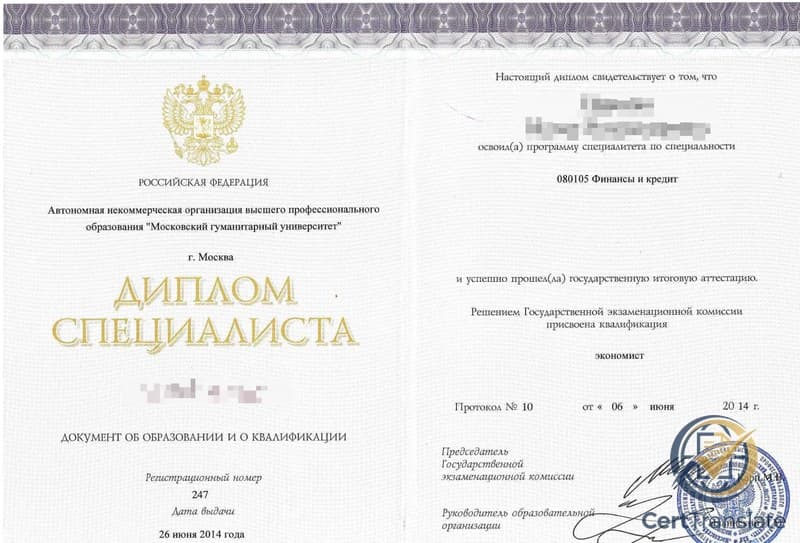
A 2014 Russian Specialist's Diploma in Finance and Credit needed an English translation for an Academic Evaluation Services (AES) filing. The diploma supplement disclosed two prior legal names of the issuing university, with the date of each rename. We rendered Section 5 of the supplement verbatim so the credential evaluator could verify institutional continuity. The packet was delivered for AES credential evaluation.
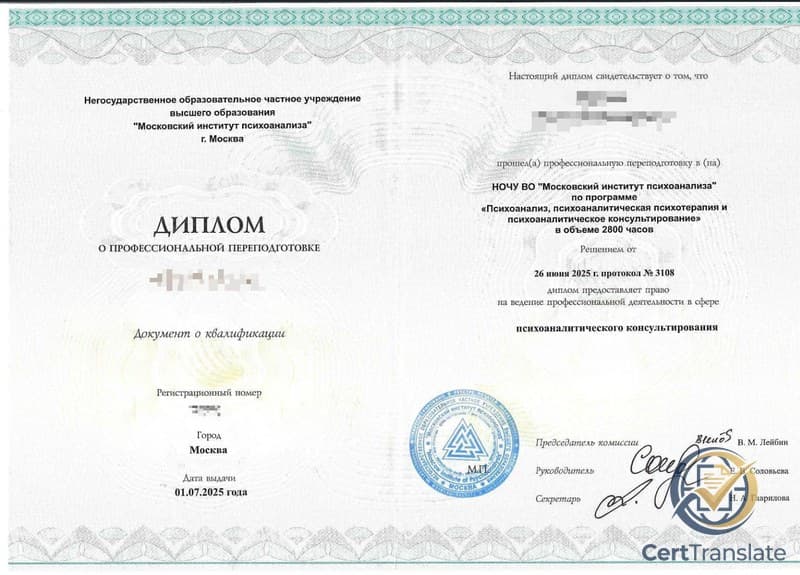
A client submitted two Russian credentials from the Moscow Institute of Psychoanalysis: a 2025 Diploma of Professional Retraining (2,800 hours, psychoanalytic counseling) and a 2022 Certificate of Advanced Training (48 hours). Both fall under Russian supplementary professional education — not academic degrees. We labeled each document type precisely, preserved the legal grant phrase, and kept the hour counts intact. The packet was delivered for Academic Evaluation Services (AES) filing.

A Turkish four-year undergraduate law diploma (Hukuk Lisansı) from Ankara University Faculty of Law was translated for WES credential evaluation. The translation kept 'Hukuk Lisansı' as a retained foreign credential name rather than substituting 'J.D.' or 'LL.B.', because the Turkish degree is an undergraduate law qualification with no exact US equivalent. A Translator's Note documented the credential, and the certified translation was delivered for the application packet.
Verified customer reviews
Daniel R.
“Maria translated my Mexican birth certificate and marriage certificate for a family-based USCIS filing and caught a surname-order issue before submission. The packet was accepted without a translation problem.”
Birth Certificate + Marriage Certificate
→ USCIS family petition
You need to price the translation and the WES evaluation together, because they solve different parts of the same submission. Translation makes the record readable. WES fees cover the evaluator report itself.
Our certified translation
True flat rate — no word-count multipliers, no per-page surprises.
Typical for this case
$49.90–$99.80
Most WES-bound academic sets: 2 to 4 pages
Pay only after you review the quote
Potential additional costs
Some World Education Services programs use an external evaluator or verification provider. These fees are separate from your CertTranslate order.
Paid directly to the named evaluator or institution and not included in your CertTranslate checkout.
Typical end-to-end scenarios
WES accepts professional translations that are exact, clear, and completed by a professional translator. In the current WES translation guidance, the agency says it does not accept translations completed by applicants. In practice, that means a proper WES certified translation is a professional academic translation package, not a self-made English summary with a signature added later.
The official WES rule is that the translation must be exact, word-for-word, clear, legible, and completed by a professional translator. Based on our experience, the safest WES translation format also preserves page order, transcript tables, grading legends, and visible seals. That makes side-by-side review easier and reduces the risk that WES has to stop the file to clarify what was omitted or reformatted.
Certified translation starts at $24.95 per page. Most WES-bound academic records fall in the two-to-four-page range, so translation usually lands between $49.90 and $99.80 before optional add-ons. WES evaluation fees are separate. Current WES pricing lists $118 USD for Document-by-Document and $186 USD for Course-by-Course, so the correct budget is translation plus the report type your school, employer, or licensing body actually requires.
Most standard academic records can be translated in about 24 hours. WES timing is separate. Current WES guidance says document verification typically takes about two weeks after all required records are received. After acceptance, a Document-by-Document evaluation typically takes one week and a Course-by-Course evaluation typically takes two; complex cases may take up to two and four weeks respectively.
If WES flags the translation, the first thing to determine is whether the problem is actually the English text or the surrounding workflow. Common WES translation requirements problems include missing transcript tables, applicant-made translations, grade conversion inside the translation, and a sender route that does not match the country instructions. The fastest fix is usually a corrected translation package that restores the omitted detail and aligns the file with the exact WES document route already in progress.
Only translate the documents listed for your specific WES application. For many completed credentials that list includes both the academic record and final credential evidence, but the exact scope varies by country, institution, credential, completion status, and report destination. Current India guidance, for example, tells applicants to include the degree or provisional certificate and all years of marksheets. Check the Required Documents list before ordering the translation.
WES says the updated application portal now uses a 10-character alphanumeric reference number. It is generated after payment by credit card or Convera is completed and received. Save it for later communication with WES and use it whenever an institution or verification route asks for the application reference.
Not from just any source. WES says translations must be completed by a professional translator, and it specifically says it cannot accept translations completed by applicants. So the real screen is not brand recognition. It is whether the provider produces a professional, complete, word-for-word academic translation that matches the official document set and can survive WES side-by-side review.
Requirements were checked against the official guidance linked below. Confirm the current instructions for your program before submitting.
| Official source | What we verified | Official guidance |
|---|---|---|
| Official sourceWESWES translation requirements for a credential evaluation | What we verified
| Open source |
| Official sourceWESCurrent processing times for WES credential evaluations | What we verified
| Open source |
| Official sourceWESWES credential evaluations and fees | What we verified
| Open source |
| Official sourceWESAnswers to questions about WES credential evaluation reports | What we verified
| Open source |
| Official sourceWESThe difference between Document-by-Document and Course-by-Course credential evaluation reports | What we verified
| Open source |
| Official sourceWESUnderstanding your WES credential evaluation report | What we verified
| Open source |
| Official sourceWESWES credential evaluation and document requirements for India | What we verified
| Open source |
| Official sourceWESWES-CSSD degree verification process for China | What we verified
| Open source |
| Official sourceWESWES evaluation report types | What we verified
| Open source |
| Official sourceWESWES CPA Board Evaluation | What we verified
| Open source |
World Education Services application translation
We format translations specifically for WES-bound academic review, including transcript tables, degree evidence, sender-route alignment, and upload-ready delivery.
Certified translation
Signed and stamped Certificate of Accuracy with secure digital delivery.
We are not affiliated with WES. We provide certified translation that meets current WES-facing formatting and completeness expectations.