
Document Translation Requirements in Mexico
Official bodies in Mexico generally require a sworn translation of foreign-language documents, and many documents also need an apostille or legalization before they are translated. Below: who can translate, when an apostille is needed, and where the official rules are published.
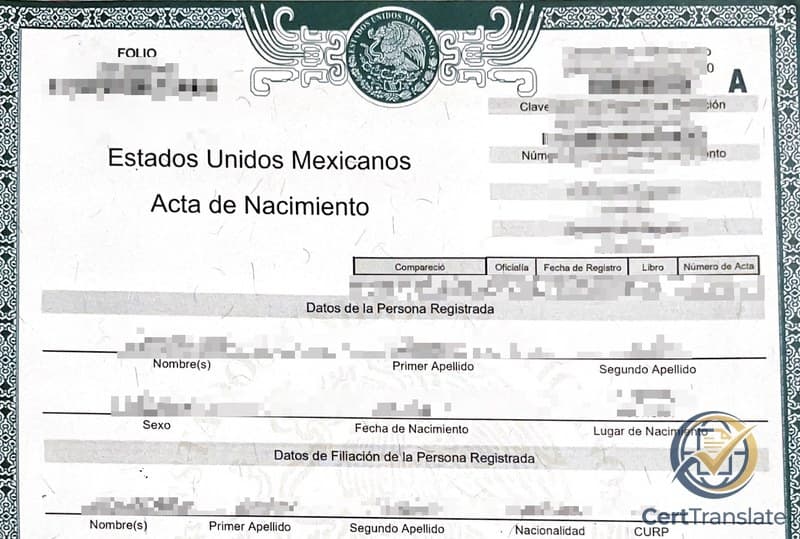
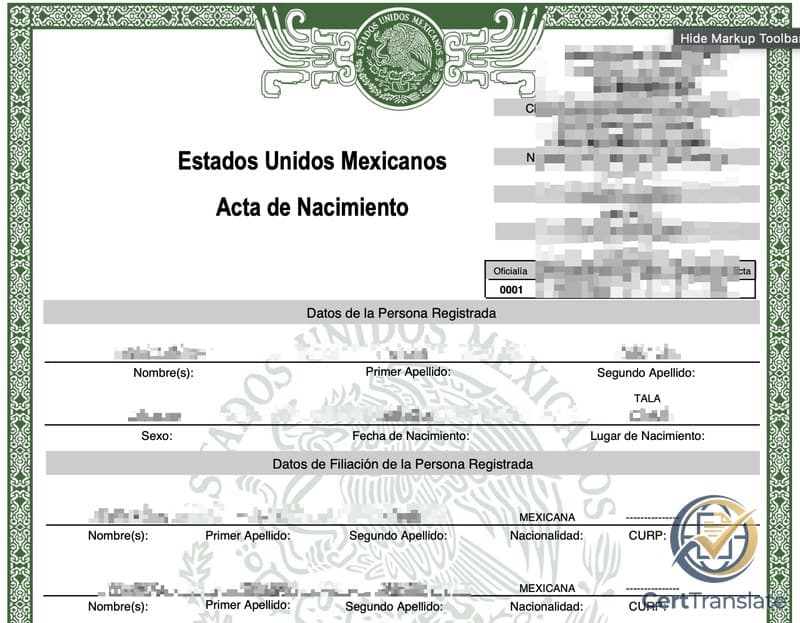
Mexico recognizes translations done by a perito traductor — an expert translator authorized by a state Superior Court of Justice (Tribunal Superior de Justicia). For a Mexican document used in the United States you instead need a certified English translation with a signed Certificate of Accuracy, which USCIS and U.S. universities accept. Mexico has been part of the Hague Apostille Convention since 1995, so a Mexican acta de nacimiento is apostilled by the issuing state — not legalized at a consulate.
Mexico requirements at a glance
| Translation standard | Sworn translation · perito traductor |
|---|---|
| Who can translate | Officially appointed perito traductor (expert translator) |
| Apostille | Required for foreign public documents before translation |
| Apostille authority | For state civil-registry documents such as an acta de nacimiento, the government of the issuing Mexican state (its Secretaría General de Gobierno); for federally issued documents, the Secretaría de Gobernación (SEGOB). |
| Accepted languages | Spanish |
| Responsible authority | Secretaría de Relaciones Exteriores (SRE) |
Who can translate documents for use in Mexico?
What makes a translation official in Mexico?
How does Mexico treat documents from abroad?
Legal basis
Apostille & legalization for Mexico
Mexico is part of the Hague Apostille Convention (since 1995), so public documents are authenticated with a single apostille — no consular legalization.
Documents from Mexico
For state civil-registry documents such as an acta de nacimiento, the government of the issuing Mexican state (its Secretaría General de Gobierno); for federally issued documents, the Secretaría de Gobernación (SEGOB).Mexico acceded in 1994; the Convention entered into force for Mexico on 14 August 1995.
U.S. documents going to Mexico
A U.S.-issued document going to Mexico is apostilled in the United States — by the Secretary of State of the issuing state for state documents (for example a U.S. birth certificate), or by the U.S. Department of State for federal documents — and then translated into Spanish by a perito traductor in Mexico.
The apostille should be obtained before the translation, so the apostille certificate is translated too. See how apostilles work, or order a translation with e-apostille.
How to get a Mexico document translation accepted
- 1
Apostille the Mexican original first (if the receiving office requires it)
A Mexican acta de nacimiento is apostilled by the issuing state's Secretaría General de Gobierno; a federally issued document by SEGOB. Do this before translation so the apostille itself is translated too.
- 2
Order a certified English translation of the whole document
The translation must cover everything on the page — the CURP, the registry data, seals, and any Firma Electrónica Avanzada verification block — with a signed Certificate of Accuracy.
- 3
Submit the original plus the certified translation
File the apostilled original (or certified copy) together with the certified translation to USCIS, the university, or the credential evaluator.
Ready to translate your Spanish documents?
Certified for USCIS, universities, and credential evaluators — from $24.95/page.
Which direction are your documents going?
Translating Spanish documents for the U.S.?
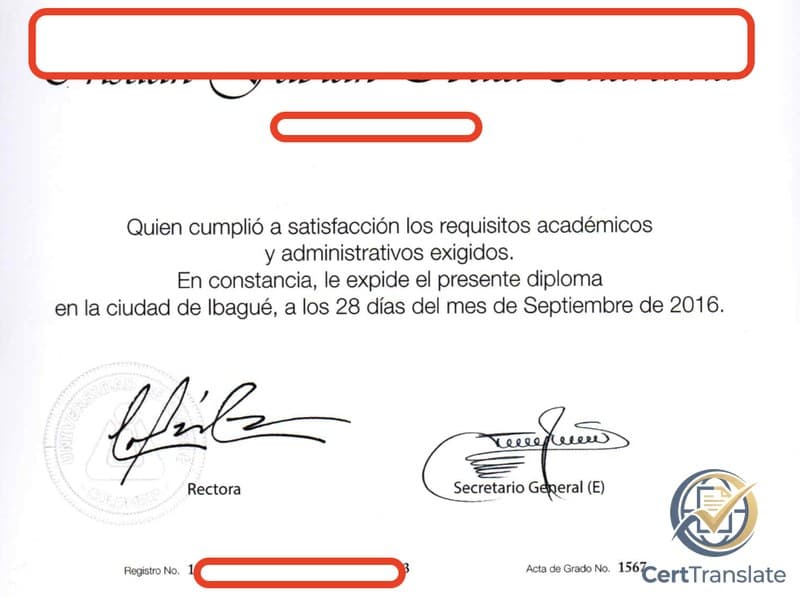
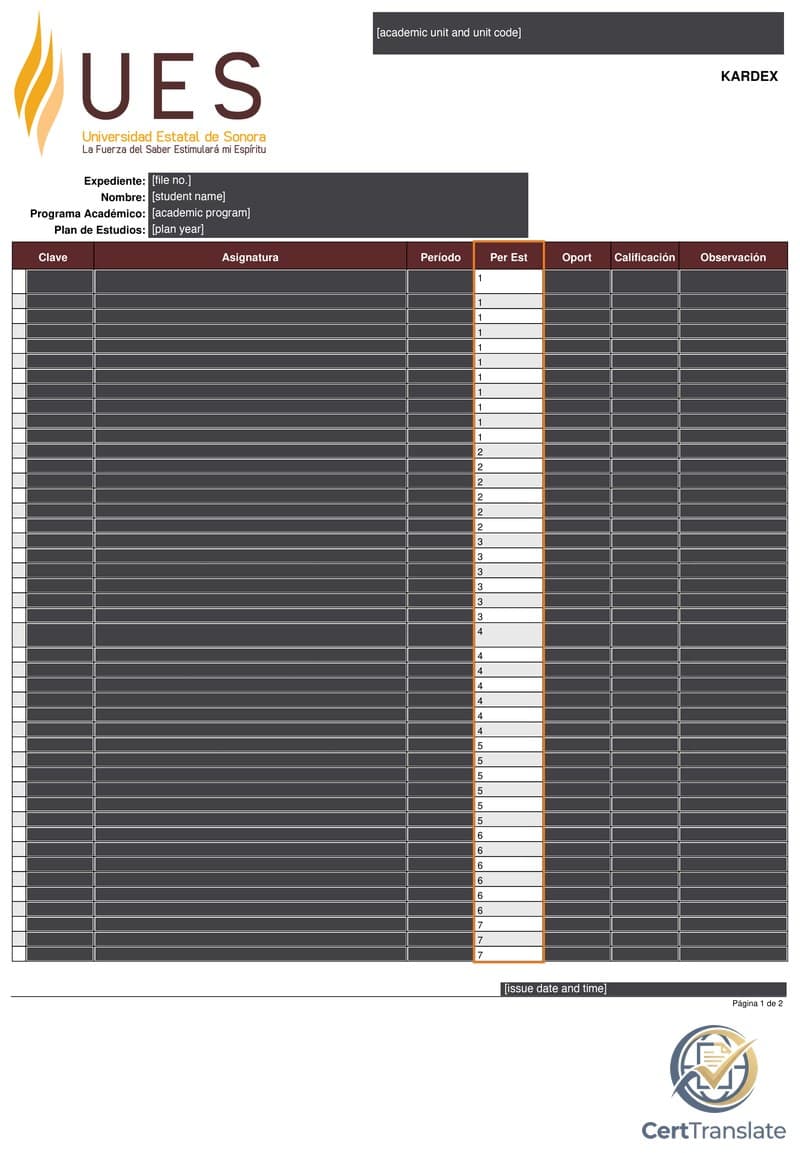
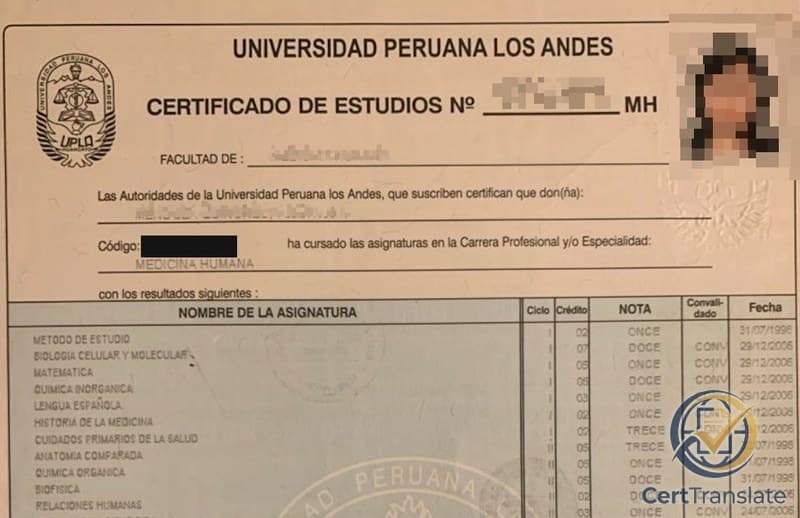
Mexican birth certificates, diplomas, and transcripts submitted to USCIS, universities, or credential evaluators need a certified English translation — that is exactly what we do, with a 100% USCIS acceptance guarantee.
Sending U.S. documents to Mexico?
U.S.-issued documents usually need an apostille before they can be used in Mexico — and the apostille should be obtained before the translation, so the certificate itself gets translated too. We offer e-apostille processing as an add-on to any order.
Popular certified translations
The Spanish documents we translate most often — each with its own pricing and requirements page.
Why Mexico document translations get rejected
The mistakes we see most often on Mexican documents — and what a correct certified translation does instead.
Blank registry fields skipped instead of rendered
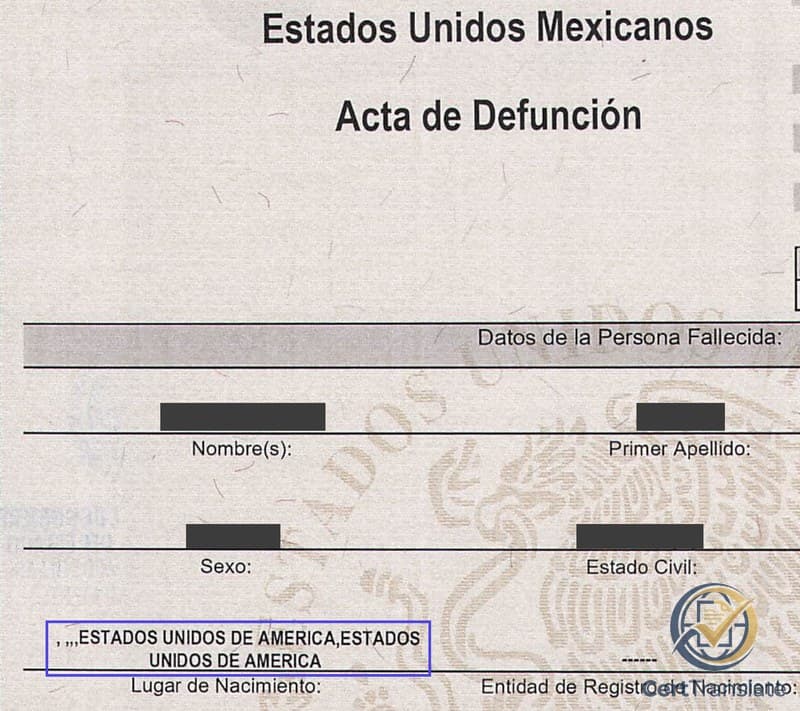
A Mexican acta with an empty field — a missing número de acta or annotation box — must show the field as blank in the translation, not omit it. USCIS reads a silently dropped field as an altered document.
Read the casePlace of birth confused with the registering municipality
A Mexican acta lists the municipality where the birth was registered separately from the actual place of birth; translating one as the other creates a place mismatch across the immigration packet.
Read the caseThe Firma Electrónica Avanzada block dropped
Digital actas carry a long electronic-signature (FEA) verification code used to confirm authenticity; it has to be reproduced in the translation, not treated as decoration.
Read the caseReal Spanish translation cases we've handled
Anonymized Spanish-to-English orders. Each case shows the exact translation problem and how we solved it for the receiving authority.
Cost & turnaround
A standard acta de nacimiento is one page and priced per page; multi-page court records (divorce, denuncia) are priced by their page count. Standard delivery is 24–48 hours, with notarization and e-apostille available as add-ons. See full pricing.
Mexico translation requirements — FAQ
What translation does Mexico require for foreign documents?
Mexico recognizes translations by a perito traductor — an expert translator authorized by a state Superior Court of Justice. A foreign document is first apostilled in its country of origin, then translated by the authorized perito traductor.
how apostilles workDo I need a sworn translator for a Mexican document used in the U.S.?
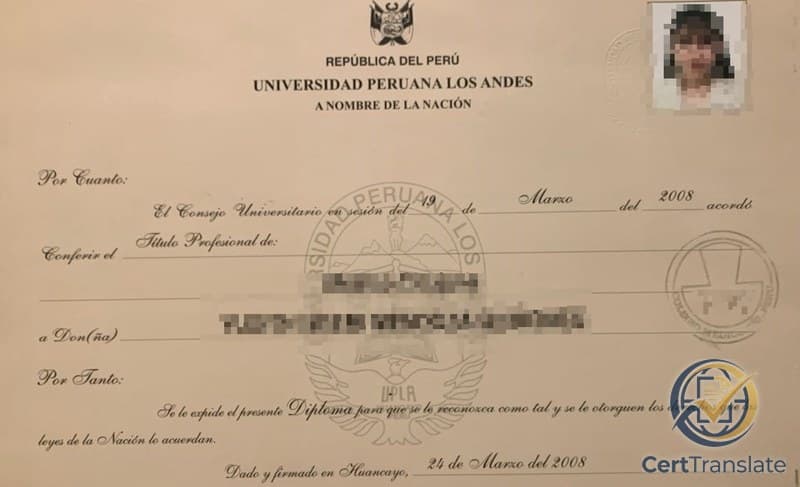
No. U.S. authorities do not use Mexico's perito traductor system. A Mexican acta or título needs a certified English translation with a signed Certificate of Accuracy, which USCIS, universities, and credential evaluators accept.
certified Spanish translationIs Mexico part of the Hague Apostille Convention?
Yes — since 14 August 1995. A Mexican public document used abroad is apostilled inside Mexico, not legalized at a consulate. A state civil-registry document like an acta de nacimiento is apostilled by the issuing state's Secretaría General de Gobierno.
requirements for other countriesDoes my acta de nacimiento need an apostille for USCIS?
USCIS requires a certified English translation of the acta, not an apostille. An apostille authenticates the original for a foreign government; USCIS generally does not require one for supporting documents, but some universities and state agencies do — confirm with the receiving office.
USCIS translation rulesWho apostilles a Mexican birth certificate?
The government of the state that issued it — its Secretaría General de Gobierno — not the federal government and not the SRE. Federally issued documents are apostilled by the Secretaría de Gobernación (SEGOB).
acta de nacimiento translationWhat is a CURP, and is it translated?
The CURP is Mexico's unique population-registry code printed on the acta. It is reproduced exactly as an identifier — not translated — while its field label is rendered in English alongside the rest of the registry data.
birth certificate translationHow much does a certified Mexican document translation cost?
Pricing is per page. A standard acta de nacimiento is a single page; multi-page court records such as a divorce or denuncia are priced by page count. Notarization and e-apostille are optional add-ons.
see live pricingCan I translate my own Mexican documents?
No. USCIS and most institutions reject self-translation because of the conflict of interest. The translation must be completed by an independent qualified translator and certified with a statement of accuracy.
what a certified translation isRequirements in related countries
Neighbors and countries with a similar translation standard.
Sources
- Apostille and legalization of documentsSecretaría de Relaciones Exteriores (Government of Mexico)
- Mexico — designated Apostille competent authoritiesHague Conference on Private International Law (HCCH)
- List of court-recognized expert translators (peritos)Consejo de la Judicatura Federal
Information verified against official sources. Last verified June 2026.
Need a certified Spanish translation?
Signed Certificate of Accuracy with every order, 100% USCIS acceptance guarantee, optional notarization and e-apostille — delivered in 24–48 hours.