




What do you do when handwritten names on an old Italian birth certificate cannot be read from the page?
TL;DRA 1961 Italian birth-record extract (estratto di nascita) from the Comune di Ischia was completed by hand in cursive. On the first pass, both parents' names and an abbreviated street name read more than one way. We confirmed each field with the document holder, then issued the certified translation with the corrected names and a Translator's Note. The note records that the values come from holder confirmation, not translator guesswork.
Case Specifications
- Document
- Birth-record extract (Italian civil registry)
- Foreign Name
- Estratto per riassunto dal registro degli Atti di Nascita (estratto di nascita)
- Country
- Italy
- Languages
- Italian → English
- Submitted To
- USCIS filing
What We Received
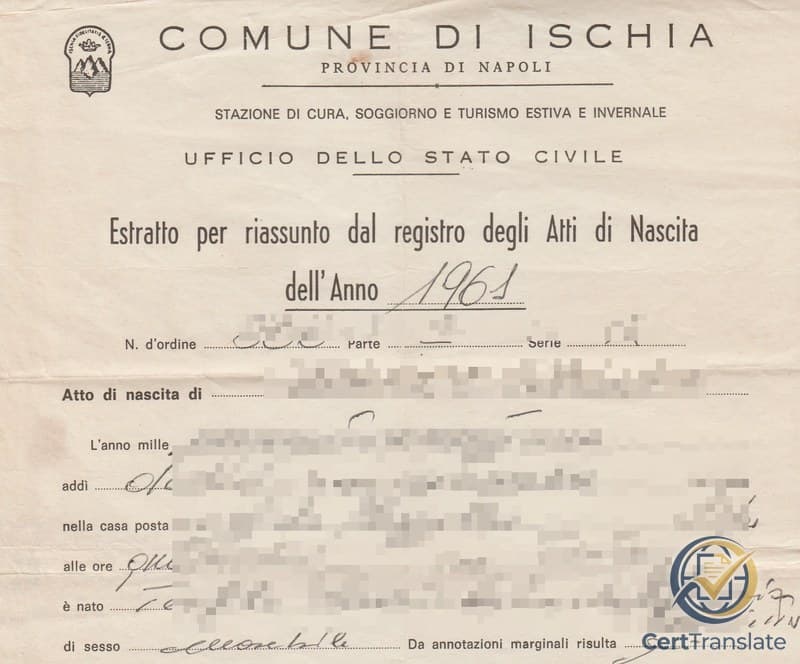
The document is an Italian birth-record extract (estratto per riassunto dell'atto di nascita) from the Comune di Ischia, in the Province of Naples. It was registered in 1961.
The form is pre-printed. A clerk filled the blanks by hand in cursive: the parents' names, the day and month, the street, and the time of birth.
The applicant needed an Italian birth record translation for a USCIS filing in the United States.
Why This Required Special Handling
A certified translation must reproduce every name as it appears in the source. USCIS expects the names to match the applicant's other records (see our USCIS translation requirements guide).
Mid-century Italian cursive makes that hard. Some letter pairs look almost identical. A capital C can read as an L, and an n can read as an r.
There was no second spelling on the page to check against. Each parent's name appears only once, so a single misread stroke has nothing to correct it. One street name was worse still: its given name was abbreviated to a single letter, which expands to more than one common first name.
How We Handled It
We first produced a best-reading of every handwritten field, the way any certified translation starts. Two parent names and one street name stayed ambiguous after that pass.
Instead of shipping those as “best interpretation,” we listed each uncertain field and asked the document holder to confirm or correct it. The holder answered the same day.
The corrections were not small. The father's given name moved from an L-name to a C-name. The mother's maiden surname changed to a different surname, a common one from the same area. The street's abbreviated given name expanded to a different first name than our first reading.
"This 1961 register extract was completed by hand in cursive. Several handwritten entries — both parents' names and the given name of the street of birth — admitted more than one reading from the page alone. The values shown here reflect direct confirmation from the document holder. The street's given name, abbreviated as a single letter in the original, is given in full."
Holder confirmation works because the person on a birth record knows their own parents' names. A reviewer reading the same cursive cold cannot rule between an L and a C. The Translator's Note then shows where each value came from, so the corrected reading does not look like a silent change to the source.
Vintage civil-registry extracts like this are routine on our Italian translation services desk. The full cycle here — best-reading, confirmation request, holder reply, re-issue — fit inside the normal turnaround for a certified single-page translation.
The Outcome
We delivered the certified translation with the holder-confirmed names and the Translator's Note, ready for the client's USCIS filing.
Holder confirmation is a routine step we use whenever a handwritten field on an older civil record reads more than one way. It produces a translation with confirmed values rather than hedged ones.
What This Means for You
If your birth certificate is old and filled in by hand, expect some names to read more than one way. That is normal for mid-century cursive, and it is fixable.
A certified translator can confirm the uncertain fields with you and record the confirmation in a Translator's Note. That gives the reviewer confirmed names instead of guesses.
Have an older Italian document with handwriting that's hard to read?
We translate Italian birth, marriage, and death records, including older register extracts completed by hand. When a cursive field reads more than one way, we confirm it with you before the certified translation goes out.
Related Cases & Resources
Sources & References
- Meet Translation Requirements·USCIS·Verified 2026-07-22
Explore the Hub
Certified Translation
Documents
Languages
All identifying information has been removed from document images. Case details are shared with client permission. No personal data is stored or displayed on this page.